Quotessence
Home / Quotes / Quote by Sheena Iyengar

Quote by Sheena Iyengar

“Whether we do it consciously or subconsciously, we tend to organize our lives to display our identity as accurately as possible. Our lifestyle choices often reveal our values, or at least what we’d like people to perceive as our values…as we make our everyday choices, we continuously calculate not just which choices best match who we are and what we want but also how those choices will be interpreted by others. We look for cues in our social environment to figure out what others think of this or that, which can require being sensitive to the most localized and up-to-date details of what a particular choice means.”

Quote by Sheena Iyengar

Work

The Art of Choosing

Browse quotes and source details for this work. more

Author

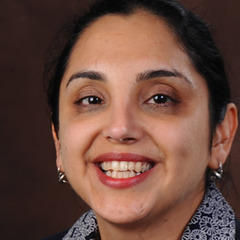
Sheena Iyengar
Sheena Iyengar

Sheena Iyengar is a distinguished professor of business at Columbia University, recognized for her work in behavioral economics. Born on November 29, 1969, she has made significant contributions to our understanding of consumer choice and decision-making processes. more

You May Also Like

“There may not be any romance to mental illness but who needs romance when the preferable route is agency? The prevailing conversation around mental health issues is agency and the lack thereof on the part of the mentally ill. But what do you do if you’re a paid-up member of the mentally ill populace in question? Do you curl up into a ball and give up? No, you look for solutions. Ultimately, it’s about keeping despair at bay and sometimes simple things like running, taking up a hobby, doing charity work, painting or, in my case, writing can be a galvanizing part of the recovery process. Keeping the brain and the body active can give life a semblance of pleasure and hope. This is what writing has done for me. I took every traumatic element of my condition and channelled it into something useful.”

“Would you actually believe that you had committed your foolish acts in order to spare your son from committing them too? And could you in any way protect your son from Sansara? How could you? By means of teachings, prayer, admonition? My dear, have you entirely forgotten that story, that story containing so many lessons, that story about Siddhartha, a Brahman's son, which you once told me here on this very spot? Who has kept the Samana Siddhartha safe from Sansara, from sin, from greed, from foolishness? Were his father's religious devotion, his teachers warnings, his own knowledge, his own search able to keep him safe? Which father, which teacher had been able to protect him from living his life for himself, from soiling himself with life, from burdening himself with guilt, from drinking the bitter drink for himself, from finding his path for himself? Would you think, my dear, anybody might perhaps be spared from taking this path? That perhaps your little son would be spared, because you love him, because you would like to keep him from suffering and pain and disappointment? But even if you would die ten times for him, you would not be able to take the slightest part of his destiny upon yourself.”

“The single word that directs a person’s fate and ultimately the fates of those she comes in contact with is of course a common subject of entertainments and moralizing stories, but if everyone were to consider all the possible consequences of all one’s possible choices, no one would move a millimeter, or even dare to breathe for fear of the ultimate results.”

“After having been standing by the gate of the garden for a long time, Siddhartha realised that his desire was foolish, which had made him go up to this place, that he could not help his son, that he was not allowed to cling him. Deeply, he felt the love for the run-away in his heart, like a wound, and he felt at the same time that this wound had not been given to him in order to turn the knife in it, that it had to become a blossom and had to shine.”