Quotessence
Home / Quotes / Quote by Bryan Stevenson

Quote by Bryan Stevenson

“We are all implicated when we allow other people to be mistreated. An absence of compassion can corrupt the decency of a community, a state, a nation. Fear and anger can make us vindictive and abusive, unjust and unfair, until we all suffer from the absence of mercy and we condemn ourselves as much as we victimize others. The closer we get to mass incarceration and extreme levels of punishment, the more I believe it's necessary to recognize that we all need mercy, we all need justice, and-perhaps-we all need some measure of unmerited grace.”

Quote by Bryan Stevenson

Author
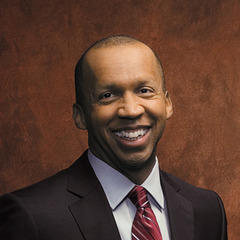
Bryan Stevenson
Bryan Stevenson

Bryan Stevenson is an American lawyer, educator, and social activist known for his contributions to criminal justice reform and the defense of the rights of the poor. Born on November 14, 1959, Stevenson is a professor at the University of Alabama at Birmingham School of Law. more

You May Also Like

“There is a strength, a power even, in understanding brokenness, because embracing our brokenness creates a need and desire for mercy, and perhaps a corresponding need to show mercy. When you experience mercy, you learn things that are hard to learn otherwise. You see things you can't otherwise see; you hear things you can't otherwise hear. You begin to recognize the humanity that resides in each of us.”

“I've come to understand and to believe that each of us is more than the worst thing we've ever done. I believe that for every person on the planet. I think if somebody tells a lie, they're not just a liar. I think if somebody takes something that doesn't belong to them, they're not just a thief. I think even if you kill someone, you're not just a killer. And because of that, there's this basic human dignity that must be respected by law.”

“Frank Capra made a series of films during World War II called 'Why We Fight' that explored America's reasons for entering the war. Today, with our troops engaged in Iraq and elsewhere for reasons far less clear, I think it's crucial to ask the questions: 'Why are we doing what we are doing? What is it doing to others? And what is it doing to us?'”