Quotessence
Home / Quotes / Quote by David Hume

Quote by David Hume

Work

The Philosophical Works: Including All the Essays, and Exhibiting the More Important Alterations and Corrections in the Successive Ed. Publ. by the Author

This book is a compilation of philosophical writings, featuring the author's essays and highlighting the major changes and improvements made throughout different editions of the work. more

Author
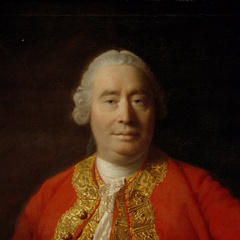
David Hume
David Hume

David Hume, born on May 7, 1711, in Edinburgh, Scotland, and died on August 25, 1776, was an outstanding philosopher, historian, and economist. Known for his contributions to empiricism and skepticism, his works have had a profound impact on subsequent philosophy, economics, and psychology. more

You May Also Like

“In speaking of the capitalists who strive only for profit, only to get rich, I do not want to say that these are the most worthless people capable of doing nothing else. Many of them undoubtedly possess great organising talent, which I would not dream of denying. We Soviet people learn a lot from the capitalists. But if you mean people who are prepared to reconstruct the world, of course you will not be able to find them in the ranks of those who faithfully serve the cause of profit. ..The capitalist is riveted in profit and nothing can tear him away from it.”

“How could politics be a science, if laws and forms of government had not a uniform influence upon society? Where would be the foundation of morals, if particular characters had no certain or determinate power to produce particular sentiments, and if these sentiments had no constant operation on actions?”

“It seems then, say I, that you leave politics entirely out of the question, and never suppose, that a wise magistrate can justly be jealous of certain tenets of philosophy, such as those of Epicurus, which, denying a divine existence, and consequently a providence and a future state, seem to loosen, in a great measure, the ties of morality, and may be supposed, for that reason, pernicious to the peace of civil society.”

“A man who has cured himself of all ridiculous prepossessions, and is fully, sincerely, and steadily convinced, from experience as well as philosophy, that the difference of fortune makes less difference in happiness than is vulgarly imagined; such a one does not measure out degrees of esteem according to the rent-rolls of his acquaintance. ... his internal sentiments are more regulated by the personal characters of men, than by the accidental and capricious favors of fortune.”

“Ever since men became capable of free speculation, their actions, in innumerable important respects, have depended upon their theories as to the world and human life, as to what is good and what is evil. This is true in the present day as at any former time. To understand an age or a nation, we must understand its philosophy, and to understand its philosophy we must ourselves be in some degree philosophers. There is here a reciprocal causation: the circumstances of men s lives do much to determine their philosophy, but, conversely, their philosophy does much to determine their circumstances.”