Quotessence
Home / Quotes / Quote by Zbigniew Brzezinski

Quote by Zbigniew Brzezinski

Author

Zbigniew Brzezinski
Zbigniew Brzezinski

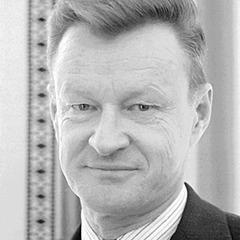
Zbigniew Brzezinski was a Polish-American political scientist and diplomat who served as the United States National Security Advisor under President Jimmy Carter from 1977 to 1981. He is known for his influential role in shaping U.S. foreign policy during the Cold War and his advocacy for a multi-polar world. more

You May Also Like

“According to the official version of history, CIA aid to the Mujahideen began during 1980, that is to say, after the Soviet army invaded Afghanistan, 24 Dec 1979. But the reality, secretly guarded until now, is completely otherwise. Indeed, it was July 3, 1979 that President Carter signed the first directive for secret aid to the opponents of the pro-Soviet regime in Kabul. And that very day, I wrote a note to the president in which I explained to him that in my opinion this aid was going to induce a Soviet military intervention.”

“Too rich to be relevant to the world's poor, [Europe] attracts immigration but cannot encourage imitation. Too passive regarding international security. Too self-satisfied, it acts as if its central political goal is to become the worlds most comfortable retirement home. Too set in its ways, it fears multicultural diversity”

“Regret what? That secret operation was an excellent idea. It had the effect of drawing the Russians into the Afghan trap and you want me to regret it? The day that the Soviets officially crossed the border, I wrote to President Carter. We now have the opportunity of giving to the USSR its Vietnam war. Indeed, for almost 10 years, Moscow had to carry on a war unsupportable by the government, a conflict that brought about the demoralization and finally the breakup of the Soviet empire.”

“In the long run, global politics are bound to become increasingly uncongenial to the concentration of hegemonic power in the hands of a single state. Hence, America is not only the first, as well as the only, truly global superpower, but it is also likely to be the very last.”

“Moreover, as America becomes an increasingly multi-cultural society, it may find it more difficult to fashion a consensus on foreign policy issues, except in the circumstance of a truly massive and widely perceived direct external threat.”

“Moreover, they [the Central Asian Republics] are of importance from the standpoint of security and historical ambitions to at least three of their most immediate and more powerful neighbors, namely Russia, Turkey and Iran, with China also signaling an increasing political interest in the region. But the Eurasian Balkans are infinitely more important as a potential economic prize: an enormous concentration of natural gas and oil reserves is located in the region, in addition to important minerals, including gold.”