Quotessence
Home / Quotes / Quote by Imran Khan

Quote by Imran Khan

“Win or lose today I am proud of the way my boys have played in the tournament.”

Quote by Imran Khan

Author
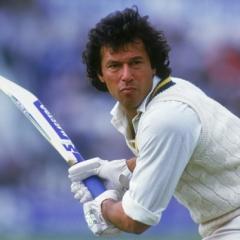
Imran Khan
Imran Khan

Imran Khan is a notable Pakistani politician and former cricket player. He is the founder and leader of the Pakistan Tehreek-e-Insaf (PTI) party, which has gained considerable popularity in Pakistan for its promises of social and economic reforms. Born on November 25, 1952, Khan began his career as a cricket player, achieving international acclaim as the captain of the Pakistani cricket team. After retiring from cricket, he shifted his focus to politics and established the PTI in 1996. Over the years, he has been a vocal advocate for change in Pakistan, addressing issues such as corruption, poverty, and education. Khan's political career has included several key achievements. He served as the Prime Minister of Pakistan from 2018 to 2022, implementing policies aimed at improving the country's economy and social welfare. His tenure was characterized by efforts to combat corruption, promote transparency, and invest in infrastructure. Khan is also recognized for his philanthropic work, particularly through the Shaukat Khanum Memorial Cancer Hospital and Research Centre, which he founded in 1994. Khan's leadership style and policies have been both lauded and criticized. His supporters praise his commitment to social justice and his efforts to reform the political system. Critics, however, argue that his government faced challenges in implementing effective policies and managing the country's economic and security issues. Despite the controversies, Khan remains a significant figure in Pakistani politics, with a strong following and a vision for the country's future. more

You May Also Like

“Over the period from 1988 to 2005, the income share of the top five percent has grown by about 3.5 percent of global household income, and the shares of all the other groups have diminished. The greatest relative reduction was in the bottom quarter, which lost about one third of its share of global household income, declining from 1.155 to 0.775 percent, and now is even more marginalized.”

“I see a violation of human rights not in the mere fact that people don't have enough to eat and that they are very vulnerable, but I see it in the fact that the economic institutional order of the world is associated with this very persistent poverty and that different institutional arrangements at the supranational level could stop and even reverse the slide towards ever-greater income disparities.”

“The collective shortfall of the 3.08 billion people (47 percent of world population) who, in 2005, lived below $2.50 per day was $507 billion per annum, which indeed comes to about two-thirds of the present US military budget. This gives us a rough sense of how much the eradication of poverty would cost.”

“Our global institutional arrangements - the basic ground rules that govern our world economy - are human-made. They don't exist naturally, nor are they God-given. We make these rules, those of the WTO [World Trade Organization] Treaty for instance, which fill tens of thousands of pages. These words have been strung together by human beings and are also interpreted and enforced by human beings.”

“Social rules are susceptible to moral analysis. This is, again, relatively familiar in the domestic case, where we now condemn slavery as unjust. And when we affirm this judgment, we're not merely saying that all those people who owned slaves were unethical people; they shouldn't have done that. We do believe this, but that's only part of the point. We also believe that the fugitive slave laws were unjust.”

“The state should never have instituted and enforced legal property rights in persons, and should not have been in the business of returning runaway slaves to their "rightful owners." The whole institution of property in human beings was an unjust social institution and should not have been maintained in existence. It is this sort of thought that I'm appealing to at the supranational level.”

“Feudalism is an economic system where a few people own all the land and the others have no option but to be serfs on such a feudal estate. We now condemn feudalism. We condemn not merely the feudal lords but we condemn the whole structure of rules that sustained feudalism. I am asking people to think similarly about the world economy.”