Quotessence
Home / Quotes / Quote by J. C. Ryle

Quote by J. C. Ryle

Work

Bible commentary - The gospel of John

This book provides an in-depth examination of the Gospel of John, exploring its theological, historical, and literary aspects. It includes commentary on the narrative, characters, and themes present in the Gospel, aiming to enhance understanding and interpretation of the text. more

Author
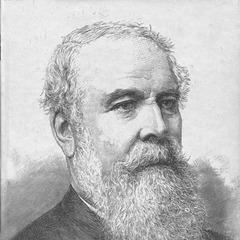
J. C. Ryle
J. C. Ryle

J. C. Ryle, the Bishop of Liverpool, was born on May 10, 1816, and died on June 10, 1900. He was a prominent religious leader in 19th-century England, known for his deep biblical scholarship and steadfast propagation of Christian faith. more

You May Also Like

“We have no reason to be discouraged and cast down if the religion we profess is not popular and few agree with us. We must remember the words of our Lord Jesus Christ in this passage: ‘The gate is narrow’. Repentance, and faith in Christ, and holiness of life, have never been fashionable. The true flock of Christ has always been small. It must not move us to find that we are reckoned singular, and peculiar, and bigoted, and narrow minded. This is the ‘narrow way’. Surely it is better to enter into eternal life with a few, than to go to ‘destruction’ with a great company”

“Happy are they, who in the matter of marriage observe three rules. The first is to marry only in the Lord, and after prayer for God’s approval and blessing. The second is not to expect too much from their partners, and to remember that marriage is, after all, the union of two sinners, and not of two angels. The third rule is to strive first and foremost for one another’s sanctification. The more holy married people are, the happier they are.”

“Christ [is] the very essence of all delights and pleasures, the very soul and substance of them. As all the rivers are gathered into the ocean, which is congregation or meeting-place of all waters in the world: so Christ is that ocean in which all true delights and pleasures meet. . . .”

“It would much conduce to the settlement of your hearts, to consider, That by fretting and discontent, you do yourselves more injury thart till the afsltilions you lie under could do; your own discontent is that which arms your troubles with a sting; it is you that make your burden heavy, by struggling under it. Could you but lie quiet under the hand of God, your condition would be much easier and sweeter than it is.”

“What is a child, but a piece of the parent enrapt up in another skin? And yet our dearest children are but as strangers to us, in comparison of the unspeakable dearness that was between the Father and Christ. Now, that he should ever be content to part with a Son, and such an only One, is such a manifestation of love, as will be admired to all eternity.”