Quotessence
Home / Quotes / Quote by Ellsworth Huntington

Quote by Ellsworth Huntington

Work

The Red Man's Continent: A Chronicle of Aboriginal America

This book offers an in-depth look at the history, culture, and experiences of Native American tribes across the continent. more

Author
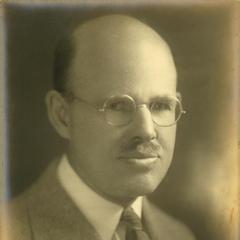
Ellsworth Huntington

Ellsworth Huntington was a prominent geographer, anthropologist, and archaeologist who made significant contributions to the fields of geography, anthropology, and archaeology. Born on September 16, 1876, and passing away on October 17, 1947, Huntington is known for his in-depth research on the relationship between geographical environment and human behavior. more

You May Also Like

“The Pacific coral reef, as a kind of oasis in a desert, can stand as an object lesson for man who must now learn that mutualism between autotrophic and heterotrophic components, and between producers and consumers in the societal realm, coupled with efficient recycling of materials and use of energy, are the keys to maintaining prosperity in a world of limited resources.”

“I can't convince myself that it does much good to try to challenge the everyday political delusions and dementias of Americans at large. Their contained and confined mentalities by far prefer the petty and parochial prisons of the kind of sense they have been trained and rewarded for making out of their lives (and are punished for deviating from them). What it costs them ultimately to be such slaves and infants and ideological zombies is a thought too monstrous and rending and spiky for them even to want to glance at.”

“Should a reasonable person not demand that philosophy should not be foolishly purveyed before people incompetent to see the point of it, as pearls before swine? For Nietzsche is utterly correct: philosophy is only for the healthy and whole-minded, the sick it has always only made even sicker. By means of philosophy they dig themselves even deeper into their pathetic delusions.”

“Human life is an extension of the principles of nature, and human civilization is a venture extrapolated out of human natures: man and his natural potential are the root of the entire human domain. The great task of all philosophizing is to become competent to interpret and steer the potential developmental forces in human natures and in the human condition, both of which are prodigiously fatalistic.”

“Myth is the practical metabolism of our soulish life, the logic of our obsessions and oversights for which we have no language or code. Myth is the "morality" that the ineffable puts upon us, our unaccountable imperatives, our inexplicably selective clarity and obscurity, the mortal one-sidedness of our talents and wits, the passion and apathy that make such a transient passage through our hapless minds; that weave a pattern of fatality others will see before we do. Myth is distinctively human or sublime higher-order instinct, the "reason" in culture that reason knows not of.”