Quotessence
Home / Quotes / Quote by Gaston Bachelard

Quote by Gaston Bachelard

“The psychology of the alchemist is that of reveries trying to constitute themselves in experiments on the exterior world. A double vocabulary must be established between reverie and experiment. The exaltation of the names of substances is the preamble to experiments on the "exalted" substances.”

Quote by Gaston Bachelard

Author
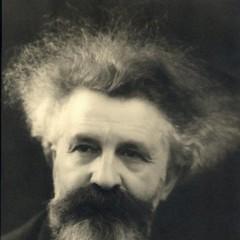
Gaston Bachelard
Gaston Bachelard

French philosopher known for his work in epistemology, poetics, and the philosophy of science. His writings have had a profound impact on 20th-century philosophy, particularly in understanding human cognition and the scientific method. more

You May Also Like

“I can't convince myself that it does much good to try to challenge the everyday political delusions and dementias of Americans at large. Their contained and confined mentalities by far prefer the petty and parochial prisons of the kind of sense they have been trained and rewarded for making out of their lives (and are punished for deviating from them). What it costs them ultimately to be such slaves and infants and ideological zombies is a thought too monstrous and rending and spiky for them even to want to glance at.”

“Should a reasonable person not demand that philosophy should not be foolishly purveyed before people incompetent to see the point of it, as pearls before swine? For Nietzsche is utterly correct: philosophy is only for the healthy and whole-minded, the sick it has always only made even sicker. By means of philosophy they dig themselves even deeper into their pathetic delusions.”

“Human life is an extension of the principles of nature, and human civilization is a venture extrapolated out of human natures: man and his natural potential are the root of the entire human domain. The great task of all philosophizing is to become competent to interpret and steer the potential developmental forces in human natures and in the human condition, both of which are prodigiously fatalistic.”

“Myth is the practical metabolism of our soulish life, the logic of our obsessions and oversights for which we have no language or code. Myth is the "morality" that the ineffable puts upon us, our unaccountable imperatives, our inexplicably selective clarity and obscurity, the mortal one-sidedness of our talents and wits, the passion and apathy that make such a transient passage through our hapless minds; that weave a pattern of fatality others will see before we do. Myth is distinctively human or sublime higher-order instinct, the "reason" in culture that reason knows not of.”

“So successful has the ideological-political-cultural purge been executed that it is hard indeed to find vigorous liberals, and no energetic, coherent and cogent leftists at all can find expression in our controlled media and educational systems. Forget about wholesale culture- or civilization-critics like Marxists. Universities have to be purged of any "radicalism" that can see through to the roots of issues and pathologies, for the same reasons that workers have to have nascent unions aborted among them and contrarian newspapers and media have to be starved of advertising.”

“"Cynicism," like "heresy" and "heterodoxy" and "atheism" and "agnosticism" and "paganism" and "heathenism," is above all else a way for organized orthodoxy's caste of official censors to encyst and segregate and thus neutralize all contrarian forms of seeing and thinking, all (necessarily implicitly) prohibited and repressed ways of exercising disruptive and iconoclastic intuition and intellection (for to analyze and explain these things too openly is to give them publicity and potential cogency when the point is to asphyxiate them).”

“(The terms douloi, banausoi and aristoi) are in a way more precise, but what is more vital and valuable, they are more comprehensive: they project a concept of psychic order that embraces entire fields that we have no other way of seeing all together as the working of a single principle. If we think of the human domain as the collaboration and the conflict of these three diverse character-types, we can understand the weave and the stress and polemics of their very different basal teleologies or ultimate governing purposes of life.”