Quotessence
Home / Quotes / Quote by William Butler Yeats

Quote by William Butler Yeats

Work

The Collected Works of W. B. Yeats: The Complete Works PergamonMedia

Browse quotes and source details for this work. more

Author
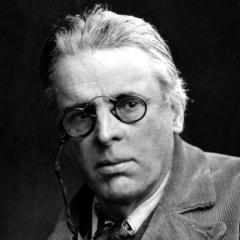
William Butler Yeats

William Butler Yeats was an Irish poet, dramatist, and essayist, considered one of the greatest poets of the 20th century. His poetry deeply reflected the nationalist sentiments of Ireland and also showcased rich imagination and profound philosophical thinking. Yeats' poetic style was versatile, evolving from early romanticism to late symbolism, and his works have had a profound impact on literature both in Ireland and around the world. more

You May Also Like

“Marilynn...passed out black cases to everyone. I opened mine to find an iPad inside. Several candidates whistled. Despite my agitated state, it impressed me too. Maybe wizard school wasn’t going to be as lame as I had thought. “All of your schedules and assignments will be done on these,” Marilynn explained. “The whole school is on these. We’ve had them for awhile now.”

“There is a small wooden viewing tower, and pamphlets from the State of Ohio, but they focus on facts—for instance, the Serpent Mound is as long as four football fields—not on meaning. In The Sacred Hoop, Paula Gunn Allen, a Native poet, mythologist, and scholar, explains that Serpent Woman was one of the names of the quintessential original spirit “that pervades everything, that is capable of powerful song and radiant movement, and that moves in and out of the mind…she is both Mother and Father to all people and all creatures. She is the only creator of thought, and thought precedes creation.” In Western mythology, she might be compared to Medusa, the serpent-haired Greek goddess whose name means Knowing Woman or Protectress. She once was all-powerful—until patriarchy came along in the form of a mythic young man who chopped off her head. He was told to do this by Athena, who sprang full-blown from the mind of her father, Zeus—a goddess thought up by patriarchy and therefore motherless. There is history in what is dismissed as prehistory.”

“The battlefield is symbolic of the field of life, where every creature lives on the death of another. A realization of the inevitable guilt of life may so sicken the heart, that like Hamlet, or like Arjuna, one may refuse to go on with it. On the other hand, like most of the rest of us, one may invent a false finally unjustified image of oneself as an exceptional phenomenon in the world--not guilty as others are, but justified in one's inevitable sinning, because one represents the good. Such self-righteousness leads to a misunderstanding, not only of oneself, but of the nature of both Man and the Cosmos. The goal of the myth is to dispel the need for such life-ignorance by affecting a reconciliation of the individual consciousness with the universal will, and this is affected through a realization of the true relationship of the passing phenomena of time to the imperishable life that lives and dies in all.”