Quotessence
Home / Quotes / Quote by T. H. White

Quote by T. H. White

Work

THE ONCE AND FUTURE KING

T.H. White's novel is a richly woven tapestry of myth and legend, following the journey of Arthur, a young king, as he learns the true nature of leadership and the complexities of the world around him. The narrative intertwines the Arthurian legend with contemporary issues, offering a thought-provoking and timeless narrative. more

Author
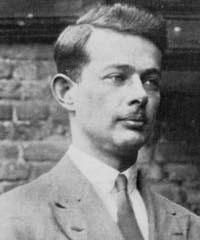
T. H. White
T. H. White

T.H. White was an English author renowned for his historical novels. His most famous work, 'The Once and Future King,' is a blend of history and fiction, chronicling the story of King Arthur and his kingdom. more

You May Also Like

“The time for the kingdom may be far off, but the task is plain: to retain our share in God in spite of peril and contempt. There is a war to wage against the vulgar, the glorification of the absurd, a war that is incessant, universal. Loyal to the presence of the ultimate in the common, we may be able to make it clear that man is more than man, that in doing the finite he may perceive the infinite .”

“In our daily lives we attend primarily to that which the senses are spelling out for us: to what the eyes perceive, to what the fingers touch. Reality to us is thinghood , consisting of substances that occupy space; even God is conceived by most of us as a thing. The result of our thinginess is our blindness to all reality that fails to identify itself as a thing, as a matter of fact.”

“There are two primary ways in which mans relates himself to the world that surround him: manipulation and appreciation . In the first way he sees in what surrounds him things to be handled, forces to be managed, objects to be put to use. In the second way he sees in what surrounds him things to be acknowledged, understood, valued or admired.”

“Man is naturally self-centered and he is inclined to regard expediency as the supreme standard for what is right and wrong. However, we must not convert an inclination into an axiom that just as man's perceptions cannot operate outside time and space, so his motivations cannot operate outside expediency; that man can never transcend his own self. The most fatal trap into which thinking may fall is the equation of existence and expediency.”