Quotessence
Home / Quotes / Quote by Raj Patel

Quote by Raj Patel

“I do think we have a food problem. In 2006, which is the year for which we have the latest data, 35.5 million Americans were food insecure. That means there are 35.5 million Americans who are so hard up at some point during the year that they didn't know where their next meal was coming from. That's a lot of Americans. They don't get reported very much because there's nothing spectacular about people skipping a meal because they're poor. The media tends to ignore that, just as it ignores the sort of chronic food shortages elsewhere in the world.”

Quote by Raj Patel

Author
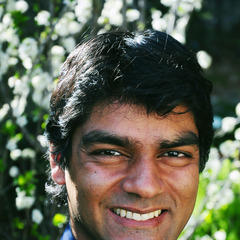
Raj Patel
Raj Patel

Raj Patel is a renowned journalist born in 1972. He is known for his in-depth investigative reporting and his focus on global inequality issues. more

You May Also Like

“Right now you're seeing more and more families reporting that they are skipping meals. They're having to give up meat. Mothers are foregoing food so their kids can have something. People are growing their own vegetables, not because they've gone organic, but because it's one of the few assured sources of food they have. For low-income Americans food is costly right now. The price of food has been going up, and wages haven't. This puts working Americans in a real bind. The fact that the mainstream media hasn't reported it doesn't mean that it's not happening.”

“I think we do need to worry about a food shortage, but we also need to worry about the quality of the food. A lot of the stuff that's marketed to us tastes delicious because it fools our bodies. It fools our bodies into thinking that a particular mix of fat and salt and sugar is good for us. In fact, it isn't. That's why you're seeing in the United States life expectancies are declining, particularly in rural areas. You're seeing life expectancies falling in part because of diet.”

“India has the largest number of hungry people. Yet it's an outcome of precisely the same mechanism. It's the control of agriculture that drives down the price it paid for food that it buys from farmers, who are the poorest people. Then you're paying very little for food. You're underpaying the poorest people in any society. Then they're marketing to us the things that are most profitable to them. And those are the things that are packaged and processed and what-have-you. That means you have the simple thing of the explosion of obesity and hunger as a result of capitalism in our food system.”

“We have the industrial agriculturalists who try and make an argument that big is beautiful. But if you do the math, and particularly if you factor in that the price of oil is going to go through the roof, and so the price of transportation is going to go through the roof - making it abundantly clear that it's out of whack. The efficiency arguments are already crumbling, particularly if you actually include the cost of food pollution that these industries cause. They are tremendously unsustainable and tremendously inefficient.”

“We need to realize that these industrial methods of farming have gotten us used to cheap food. The corollary of cheap food is low wages. What we need to do in an era when the price of food is going up is pay better wages. A living wage is an absolutely integral part of a modern food system, because you can't expect people to eat properly and eat in a sustainable way if you pay them nothing. In fact, it's cheap food that subsidized the exploitation of American workers for a very long time, and that's always been an aim of cheap food.”

“Yet if you go to the supermarket and look at food that's produced through industrial agriculture, look at what's happened to the prices. Have they been going down? They've been going up and they will continue to go up. So the choice is either, do we hitch onto a system of agriculture that's doomed and will doom the planet with it, and go along the route of industrial agriculture, or do we want to shift to a kind of system that we know is going to be, in the long run, cheaper, because we'll have a planet left at the end of it? We need to factor that cost in.”