Quotessence
Home / Quotes / Quote by Wolfgang Pauli

Quote by Wolfgang Pauli

Work

Wissenschaftlicher Briefwechsel mit Bohr, Einstein, Heisenberg u.a. Band IV, Teil III: 1955–1956. Scientific Correspondence with Bohr, Einstein, Heisenberg, a.o. Volume IV, Part III: 1955–1956

Wissenschaftlicher Briefwechsel mit Bohr, Einstein, Heisenberg u.a. Band IV, Teil III: 1955–1956 is a comprehensive volume that includes letters and discussions among some of the most influential scientists of the 20th century. The correspondence offers a unique glimpse into the minds of these physicists, showcasing their thoughts on theoretical physics, quantum mechanics, and the broader implications of their work. This volume is particularly significant for those interested in the historical development of scientific thought and the personal interactions among leading scientists during a pivotal era in physics. more

Author
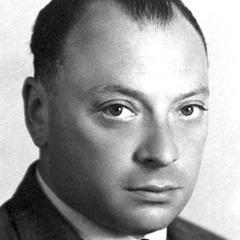
Wolfgang Pauli
Wolfgang Pauli

Wolfgang Pauli was a distinguished physicist born on April 25, 1900, and died on December 15, 1958. He is recognized for his substantial contributions to quantum mechanics, especially for the formulation of the Pauli exclusion principle. Pauli was awarded the Nobel Prize in Physics in 1945 for his work on the explanation of the fine structure of atomic spectra. more

You May Also Like

“I have never done anything 'useful'. No discovery of mine has made, or is likely to make, directly or indirectly, for good or ill, the least difference to the amenity of the world... Judged by all practical standards, the value of my mathematical life is nil; and outside mathematics it is trivial anyhow. I have just one chance of escaping a verdict of complete triviality, that I may be judged to have created something worth creating. And that I have created something is undeniable: the question is about its value.”

“I never could do anything with figures, never had any talent for mathematics, never accomplished anything in my efforts at that rugged study, and to-day the only mathematics I know is multiplication, and the minute I get away up in that, as soon as I reach nine times seven- [He lapsed into deep thought, trying to figure nine times seven. Mr. McKelway whispered the answer to him.] I've got it now. It's eighty-four. Well, I can get that far all right with a little hesitation. After that I am uncertain, and I can't manage a statistic.”

“If the proof starts from axioms, distinguishes several cases, and takes thirteen lines in the text book ... it may give the youngsters the impression that mathematics consists in proving the most obvious things in the least obvious way.”

“In his wretched life of less than twenty-seven years Abel accomplished so much of the highest order that one of the leading mathematicians of the Nineteenth Century could say without exaggeration, "Abel has left mathematicians enough to keep them busy for five hundred years." Asked how he had done all this in the six or seven years of his working life, Abel replied, "By studying the masters, not the pupils."”

“In order to translate a sentence from English into French two things are necessary. First, we must understand thoroughly the English sentence. Second, we must be familiar with the forms of expression peculiar to the French language. The situation is very similar when we attempt to express in mathematical symbols a condition proposed in words. First, we must understand thoroughly the condition. Second, we must be familiar with the forms of mathematical expression.”

“In the company of friends, writers can discuss their books, economists the state of the economy, lawyers their latest cases, and businessmen their latest acquisitions, but mathematicians cannot discuss their mathematics at all. And the more profound their work, the less understandable it is.”

“In the last two months I have been very busy with my own mathematical speculations, which have cost me much time, without my having reached my original goal. Again and again I was enticed by the frequently interesting prospects from one direction to the other, sometimes even by will-o'-the-wisps, as is not rare in mathematic speculations.”