Quotessence
Home / Quotes / Quote by Laozi

Quote by Laozi

“The feminine values are the fountain of bliss. Know the masculine, Keep to the feminine.”

Quote by Laozi

Author
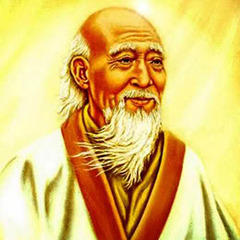
Laozi
Laozi

Laozi, also known as Lao Dan, was a renowned ancient Chinese philosopher and the founder of the Taoist school of thought. His birth and death dates are approximately 604 BC to 531 BC. Laozi advocated for顺应自然 (yielding to nature) and the principle of non-action (wu wei), which had a profound impact on Chinese philosophy, culture, and politics. more

You May Also Like

“To be motherly is a totally different phenomenon. It is something absolutely human; it transcends animality. It has nothing to do with biology. It is love, pure love, unconditional love. When a mother loves unconditionally - and only a mother can love unconditionally - the child learns the joy of unconditional love. The child becomes capable of loving unconditionally. And to be able to love unconditionally is to be religious. And it is the easiest thing for a woman to do. It is easy for her because naturally she is ready for it.”

“The 'feminine' woman is forever static and childlike. She is like the ballerina in an old-fashioned music box, her unchanging features tiny and girlish, her voice tinkly, her body stuck on a pin, rotating in a spiral that will never grow.”

“The man and the woman are not really two separate entities, but the personality of the man needs the supporting qualities of the woman. If those supporting qualities are not there, the man will fall apart. And the same will happen to the woman. She cannot exist only on female qualities, she needs male supporting qualities. So each human being is a composite whole of two polarities which appear opposed to each other but are not really opposed; they are basically, absolutely essential components of each other.”

“The suburban housewife - she was the dream image of the young American women and the envy, it was said, of women all over the world. The American housewife - freed by science and labor-saving appliances from the drudgery, the dangers of childbirth, and the illnesses of her grandmother had found true feminine fulfillment.”