“And who can deny that Stalin and Mao, not to mention Pol Pot and a host of others, all committed atrocities in the name of a Communist ideology that was explicitly atheistic? Who can dispute that they did their bloody deeds by claiming to be establishing a "new man" and a religion-free utopia? These were mass murders performed with atheism as a central part of their ideological inspiration, they were not mass murders done by people who simply happened to be atheist.”
Quote by Dinesh D'Souza
Author
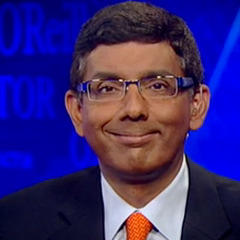
Dinesh D'Souza
Dinesh D'Souza is an American author and political activist recognized for his conservative viewpoints and influential writings. Born on April 25, 1961, he has contributed to the political and intellectual landscape in the United States with his books that often delve into political philosophy and the influence of culture on society. more
You May Also Like
Source: Exposition of the Old and New Testament
Source: An Exposition of the Old and New Testament: Wherein Each Chapter is Summed Up in Its Contents: Job-Solomon's Song. 1839
Source: A Supplementary Volume to the Works of Alexander Pope, Esq: Containing Pieces of Poetry, Not Inserted in Warburton's and Warton's Editions : and a Collection of Letters, Now First Published
“Atheism is a crutch for those who cannot bear the reality of God.”
Source: Jumpers
Source: Self-consciousness: memoirs