“Our Constitution... has not left the religion of its citizens under the power of its public functionaries, were it possible that any of these should consider a conquest over the conscience of men either attainable or applicable to any desirable purpose.”
Quote by Thomas Jefferson
Work
The writings of Thomas Jefferson: being his autobiography, correspondence, reports, messages, addresses, and other writings, official and private
This volume gathers the diverse literary output of Thomas Jefferson, one of America's founding fathers and a pivotal figure in the nation's early history. The collection encompasses his autobiographical writings, offering insight into his personal life and self-reflection. It includes his extensive correspondence with contemporaries, revealing his thoughts on politics, philosophy, science, and everyday matters. Official documents such as presidential messages and addresses are presented alongside private letters, providing a complete picture of Jefferson's roles as statesman, diplomat, and intellectual. The compilation reflects his wide-ranging interests in government, architecture, education, agriculture, and natural philosophy. This collected edition serves as a valuable resource for understanding the mind of one of America's most influential founders and the era in which he lived. more
Author
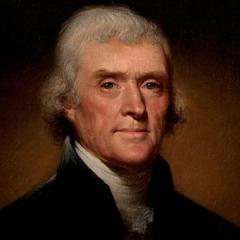
Thomas Jefferson
Thomas Jefferson was the third President of the United States, a distinguished politician, philosopher, architect, and scientist. He was born on April 13, 1743, and died on July 4, 1826. Jefferson advocated for democracy and freedom in politics and was one of the main authors of the Declaration of Independence. His political ideas had a profound impact on the founding and development of the United States. more
You May Also Like
Source: The writings of Thomas Jefferson
Source: The Works of Thomas Jefferson: Correspondence 1771 - 1779, the Summary View, and the Declaration of Independence
Source: The portable Thomas Jefferson
Source: Jefferson: Writings
“Revelation, indeed, as such had no influence on my mind”
Source: Works of the late Dr. Benjamin Franklin: consisting of his life, written by himself : together with essays, humourous, moral & literary, chiefly in the manner of the Spectator : in two volumes