Quotessence
Home / Quotes / Quote by Jackson Pollock

Quote by Jackson Pollock

“Technic is the result of a need new needs demand new technics total control denial of the accident States of order organic intensity energy and motion made visible memories arrested in space, human needs and motives acceptance”

Quote by Jackson Pollock

Author
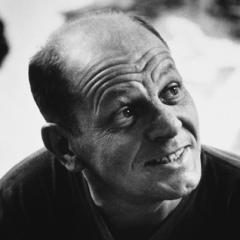
Jackson Pollock
Jackson Pollock

Jackson Pollock, born on January 28, 1912, was an influential American abstract expressionist painter. Known for his unique techniques of drip painting and splatter painting, he pioneered a new style of action painting. Pollock's works hold a significant place in art history and have had a profound impact on artists of later generations. more

You May Also Like

“The idea of an isolated American painting , so popular in this country during the thirties, seems absurd to me, just as the idea of a purely American mathematics or physics would seem absurd... And in another sense, the problem doesn't exist at all; or, if it did, would solve itself: An American is an American and his painting would naturally be qualified by the fact, whether he wills or not. But the basic problems of contemporary painting are independent of any one country.”

“The modern artist is living in a mechanical age and we have a mechanical means of representing objects in nature such as the camera and photograph. The modern artist, it seems to me, is working and expressing an inner world - in other words - expressing the energy , the motion and the other inner forces ... the modern artist is working with space and time , and expressing his feelings rather than illustrating.”

“Well, method is, it seems to me, a natural growth out of a need, and from a need the modern artist has found new ways of expressing the world about him. I happen to find ways that are different from the usual techniques, which seems a little strange at the moment, but I don't think there's anything very different about it. I paint on the floor and this isn't unusual - the Orientals did that.”

“With experience it seems to be possible to control the flow of paint, to a great extent, and I don't use - I don't use the accident - 'cause I deny the accident... it's quite different from working, say, from a still life where you set up objects and work directly from them. I do have a general notion of what I'm about and what the results will be. I approach painting in the same sense as one approaches drawing, that is, it's direct.”