Quotessence
Home / Quotes / Quote by Hilaire Belloc

Quote by Hilaire Belloc

“... But as a Godless greed pursued its career from excess to excess, it provoked a sort of twin hostile brother, equally Godless, born in the same atmosphere of utter disregard for the foundational virtues of humility and charity. This hostile twin brother of Capitalism was destined to be called Communism, and is today setting out to murder its elder.”

Quote by Hilaire Belloc

Author
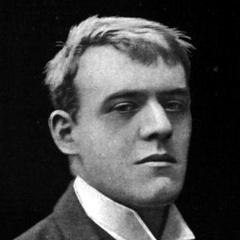
Hilaire Belloc
Hilaire Belloc

Hilaire Belloc was an English writer, poet, and historian, born on July 27, 1870, and died on July 16, 1953. He is recognized for his contributions to poetry, fiction, and political commentary. more

You May Also Like

“Communism worked honestly by officials devoid of human frailties and devoted to nothing but the good of its slaves, would have certain manifest material advantages as compared with a proletarian wage-system where millions live in semi-starvation, and many millions more in permanent dread thereof. But even if it were administered thus Communism would only produce its benefits through imposing slavery.”

“Consider in what way the industrial system developed upon capitalist lines. Why were a few rich men put with such ease into possession of the new methods? Why was it normal and natural in their eyes and in that of contemporary society that those who produced the new wealth with the new machinery should be proletarian and dispossessed?”

“Economic freedom is in our eyes a good. It is among the highest of temporal goods because it is necessary to the highest life of society through the dignity of man and through the multiplicity of his action, in which multiplicity is life. Through well-divided property alone can the units of society react upon the State. Through it alone can a public opinion flourish. Only where the bulk of the cells are healthy can the whole organism thrive.”

“It is therefore our business to restore economic freedom through the restoration of the only institution under which it flourishes, which institution is Property. The problem before us is, how to restore Property so that it shall be, as it was not so long ago, a general institution.”

“Even if the wealth and power be well distributed throughout a community, its members will not be happy unless they are inwardly so, and obviously where the distribution is bad, where the few have a vast superfluity and the many are consumed by anxiety or want, or where a few controllers can exercise their will over the many, society has failed, even though its total wealth and power be increased.”

“Had there been any existent vital and energetic institution left in Society after the Reformation for the use of small property in coordinated form-that is, in combination, so that the average man's holding could be put to useful purpose in company with the holdings of a great number of other men of his own sort, the new evils would not have arisen.”

“In the form of security and sufficiency for the men who labor to the profit of others, and in the form of registering and controlling them in the form of an organized public supervision of their labor, slavery is already afoot. When slavery shall succeed it will succeed through the acquiescence of those who will be enslaved, for they will prefer sufficiency and security with enslavement, to freedom, responsibility, insecurity and the threat of insufficiency.”

“In the same way the eminence attaching to the mere possession of great wealth disappoints us nine times out of ten, especially if the wealth has been accumulated rapidly. For great wealth is accumulated rapidly by cunning or chance, or a mixture of the two. Cunning has nothing to do with high qualities; it is rather a presumption against them; while chance has nothing to do with them either. Therefore it is that men are always complaining after meeting So-and-so, that he seemed to be astonishingly stupid, though he made a million in ten years and started as a pauper.”

“It is Mind which determines the change of Society, and it was because the mind at work was a Catholic mind that the slave became a serf and was on his way to becoming a peasant and a fully free man-a man free economically as well as politically. The whole spirit of the Church was for small property, and that spirit was slowly, instinctively, working for the establishment of small property throughout Christendom.”