Quotessence
Home / Quotes / Quote by Charlotte Perkins Gilman

Quote by Charlotte Perkins Gilman

“What do you study?" "As much as we know of the different sciences. We have, within our limits, a good deal of knowledge of anatomy, physiology, nutrition—all that pertains to a full and beautiful personal life. We have our botany and chemistry, and so on—very rudimentary, but interesting; our own history, with its accumulating psychology." "You put psychology with history—not with personal life?" "Of course. It is ours; it is among and between us, and it changes with the succeeding and improving generations. We are at work, slowly and carefully, developing our whole people along these lines. It is glorious work—splendid! To see the thousands of babies improving, showing stronger clearer minds, sweeter dispositions, higher capacities—don't you find it so in your country?”

Quote by Charlotte Perkins Gilman

Book:Herland

Work

Herland

Browse quotes and source details for this work. more

Author

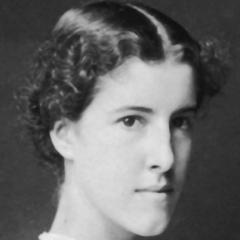
Charlotte Perkins Gilman

Charlotte Perkins Gilman was an American novelist, social reformer, and feminist. Her works explored the status of women in society, family, and career, and had a profound impact on women's literature and social movements. more

You May Also Like

“When they challenge the innocent morality of the rights regime, anthropologists join a number of political and legal theorists who have asked whether humanitarianism is the new face of colonialism. Some have pointed out the paradoxes of rights-based arguments: that they allow people to make claims, but lock them into fixed identities defined by their injuries rather than freeing them from these identities into a world of equals; or they absolve the perpetrators of past violence by making them the defenders of rights.”

“Some writers have even argued that it may be possible to wean sex offenders away from their criminal activities through the use of pornography - with pornography acting as a substitute for sexual acts rather than a stimulant. This ties in with the argument that the pro-censorship lobby fails to distinguish between fantasy and reality, and to recognise that many people - including feminists! - can behave in perfectly decent, moral and non-abusive ways whilst enjoying `politically incorrect’ sexual fantasies. The assumption that fantasy leads to crimes of abuse is both highly contentious and inevitably seems to ‘criminalise’ sexual fantasy. Moreover, the argument that exposure to pornography causes men to act in a violent or abusive way towards women is surely undermined by even a casual look at human history and at the contemporary world.”

“Feminists know that if women are paid equal wages for equal work, women will gain sexual as well as economic independence. But feminists have refused to face the fact that in a woman-hating social system, women will never be paid equal wages. Men in all their institutions of power are sustained by the sex labor and sexual subordination of women. The sex labor of women must be maintained; and systematic low wages for sex-neutral work effectively force women to sell sex to survive. The economic system that pays women lower wages than it pays men actually punishes women for working outside marriage or prostitution, since women work hard for low wages and still must sell sex. The economic system that punishes women for working outside the bedroom by paying low wages contributes significantly to women's perception that the sexual serving of men is a necessary part of any woman's life: or how else could she live? Feminists appear to think that equal pay for equal work is a simple reform, whereas it no reform at all; it is revolution. Feminists have refused to face the fact that equal pay for equal work is impossible as long as men rule women, and right-wing women have refused to forget it.”

“What is whiter than snow?' he said. 'The truth,' said Grania. 'What is the best colour?' said Finn. 'The colour of childhood,' said she. 'What is hotter than fire?' 'The face of a hospitable man when he sees a stranger coming in, and the house empty.' 'What has a taste more bitter than poison?' 'The reproach of an enemy.' 'What is best for a champion?' 'His doings to be high, and his pride to be low.' 'What is the best of jewels?' 'A knife.' 'What is sharper than a sword?' 'The wit of a woman between two men.' 'What is quicker than the wind?' said Finn then. 'A woman’s mind,' said Grania. And indeed she was telling no lie when she said that.”

“This defines the task of feminism not only because male dominance is perhaps the most pervasive and tenacious system of power in history, but because it is metaphysically near perfect. Its point of view is the standard for point-of-viewlessness, its particularity the meaning of universality. Its force is exercised as consent, its authority as participation, its supremacy as the paradigm of order, its control as the definition of legitimacy. In the face of this, feminism claims the voice of women's silence, the sexuality of women's eroticized desexualization, the fullness of "lack", the centrality of women's marginality and exclusion, the public nature of privacy, the presence of women's absence. This approach is more complex than transgression, more transformative than transvaluation, deeper than mirror-imaged resistance, more affirmative than the negation of negativity. It is neither materialist nor idealist; it is feminist. Neither the transcendence of liberalism nor the determination of materialism works for women. Idealism is too unreal; women's inequality is enforced, so it cannot simply be thought out of existence, certainly not by women. Materialism is too real; women's inequality has never not existed, so women's equality never has. That is, the equality of women to men will not be scientifically provable until it is no longer necessary to do so... If feminism is revolutionary, this is why.”

“This point is often missed by evangelical feminists. They conclude that a difference in function necessarily involves a difference in essence; i.e., if men are in authority over women, then women must be inferior. The relationship between Christ and the Father shows us that this reasoning is flawed. One can possess a different function and still be equal in essence and worth. Women are equal to men in essence and in being; there is no ontological distinction, and yet they have a different function or role in church and home. Such differences do not logically imply inequality or inferiority, just as Christ’s subjection to the Father does not imply His inferiority.”