Quotessence
Home / Quotes / Quote by Nixon Waterman

Quote by Nixon Waterman

“No man can feel himself alone The while he bravely stands Between the best friends ever known His two good, honest hands.”

Quote by Nixon Waterman

Author
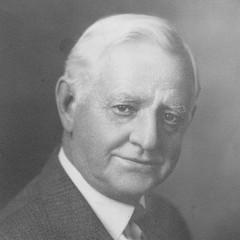
Nixon Waterman
Nixon Waterman

Nixon Waterman, born on November 12, 1859, and died on September 1, 1944, was an outstanding writer. His works are renowned for their profound character portrayals and rich imagination, leaving a profound impact on the literary world. more

You May Also Like

“Although the semicircle of the Moon is placed above the circle of the Sun and would appear to be superior, nevertheless we know that the Sun is ruler and King. We see that the Moon in her shape and her proximity rivals the Sun with her grandeur, which is apparent to ordinary men, yet the face, or a semi-sphere of the Moon, always reflects the light of the Sun.”

“Cut that in Three, which Nature hath made One , Then strengthen hyt, even by it self alone, Wherewith then Cutte the poudred Sonne in twayne, By length of tyme, and heale the woonde againe. The self same Sunne twys yet more, ye must wounde, Still with new Knives, of the same kinde, and grounde; Our Monas trewe thus use by natures Law, Both binde and lewse, only with rype and rawe, And ay thanke God who only is our Guyde, All is ynugh, no more then at this Tyde.”

“There is (gentle reader) nothing (the works of God only set apart) which so much beautifies and adorns the soul and mind of man as does knowledge of the good arts and sciences . Many arts there are which beautify the mind of man; but of all none do more garnish and beautify it than those arts which are called mathematical , unto the knowledge of which no man can attain, without perfect knowledge and instruction of the principles, grounds, and Elements of Geometry.”

“The chief requisite for the making of a good chicken pie is chicken; no amount of culinary legerdemain can make up for the lack of chicken. In the same way, the chief requisite for the history of science is intimate scientific knowledge; no amount of philosophic legerdemain can make up for its absence.”

“The ability of nonintelligent people to understand the most complicated mechanisms and to use them has always been to me a cause of astonishment: their inability to understand simple questions is even more astonishing. The general acceptance of simple ideas is difficult and rare, and yet it is only when simple, fundamental, ideas have been accepted that further progress becomes possible on a higher level.”