Quotessence
Home / Quotes / Quote by Rupert Sheldrake

Quote by Rupert Sheldrake

“The Gaia Hypothesis of James Lovelock [and Lynn Margulis] puts forward a scientific view of the living Earth, which in one respect is modern, empherical, scientific, in another respect re-awakens an ancient archetype, which in fact is so clearly suggested by the very name of the hypothesis, Gaia, the Greek name for Mother Earth.”

Quote by Rupert Sheldrake

Author
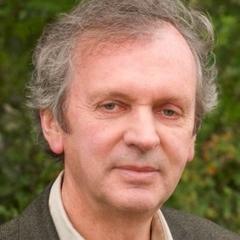
Rupert Sheldrake
Rupert Sheldrake

Rupert Sheldrake is a British author and scientist known for his interdisciplinary research in science, religion, and philosophy. Born on June 28, 1942, he is a prolific writer with over 20 books covering a variety of topics, including consciousness, mind, evolution, memory, and morphic resonance. Sheldrake's research often challenges traditional scientific views and proposes innovative scientific theories. more

You May Also Like

“So there’s a kind of resurgence of the sense of freedom and spontaneity in nature. From nature being bound into a rigid, deterministic model, freedom, spontaneity and openness are emerging once again. It’s now recognized the future is open, not determined by the past. And this is true in many realms, the astronomical realm, the human realm, the meteorological realm in many ways.”

“Hundreds of years ago, Indian artists created visual images of dancing Shivas in a beautiful series of bronzes. In our time, physicists have used the most advanced technology to portray the patterns of the cosmic dance. The metaphor of the cosmic dance thus unifies ancient mythology, religious art and modern physics.”

“Modern physics had shown that the rhythm of creation and destruction is not only manifest in the turn of the seasons and in the birth and death of living creatures, but is also the very essence of inorganic matter. For modern physicists...Shiva's dance is the dance of subatomic matter.”

“Shallow ecology is anthropocentric, or human-centred. It views humans as above or outside nature, as the source of all value, and ascribes only instrumental, or 'use', value to nature. Deep ecology does not separate humans - or anything else - from the natural environment. It does see the world not as a collection of isolated objects but as a network of phenomena that are fundamentally interconnected and interdependent. Deep ecology recognizes the intrinsic value of all human beings and views humans as just one particular strand in the web of life.”

“Gradually, physicists began to realise that nature, at the atomic level, does not appear as a mechanical universe composed of fundamental building blocks, but rather as a network of relations, and that, ultimately, there are no parts at all in this interconnected web. Whatever we call a part is merely a pattern that has some stability and therefore captures our attention.”