Quotessence
Home / Quotes / Quote by Emmanuel Macron

Quote by Emmanuel Macron

“Every country has its own diplomacy. Being part of Europe doesn't mean giving up one's independence or no longer being able to take the initiative.”

Quote by Emmanuel Macron

Author
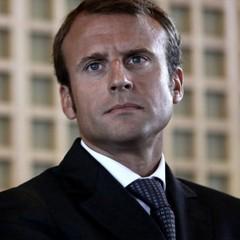
Emmanuel Macron
Emmanuel Macron

Emmanuel Macron is a French politician currently serving as the Minister of the Economy, Finance, and Industry. Born on December 21, 1977, in the northern city of Amiens, Macron has made a name for himself with his reformist spirit and modern political style. He obtained a doctorate from the École Normale Supérieure and entered the political scene in 2012, serving as the Minister of the Economy. In 2014, he left government to join the Socialist Party, and in 2016, he founded his own party, En Marche!, and was elected President of France, becoming the youngest president in French history. more

You May Also Like

“Peter Drucker being one of the most important influences because he has helped to think differently about organizational leadership and management. Frankly, I learn something of value from everyone I meet. My Harvard colleagues. My students. The executives I work with. For an eager student, which is what I am, there is so much to be learned from everyday experiences. I'm a sponge. Always will be.”

“Time is a function of impact. The longer a book of mine has been in print, the greater its impact seems to be as people absorb and digest my ideas. I am especially proud of The Change Master: Innovation and Entrepreneurship in the American Corporation, first published in 1983, because it raised questions and addressed issues at a time when so many great changes were occurring in our society, indeed throughout the world.”

“John Akers once said that changing IBM's culture was more difficult than getting elephants to dance. Of course it's really difficult, as Lou Gerstner also found out years later. The title of his own book is Who Says Elephants Can't Dance? He and his top executives were change masters at IBM. All organizations, especially the larger ones, will always need change masters. Dissatisfaction with the status quo and efforts to improve it should be encouraged rather than discouraged. Regrettably, that is often not the case.”

“Throughout human history, people have developed strong loyalties to traditions, rituals, and symbols. In the most effective organizations, they are not only respected but celebrated. It is no coincidence that the most highly admired corporations are also among the most profitable. Why? Because everyone involved is committed to certain non-negotiable core values. Traditions keep them alive. Rituals such as special occasions reaffirm them. Symbols serve as constant reminders of their enduring importance.”

“A great thinker once described innovative thinkers this way: "Some men see things as they are and say, 'Why?' I dream of things that never were and say, 'Why not?'" Innovative thinkers are constantly asking questions such as these. How can we improve recruiting, hiring and training. How can be add greater value to our products and services by making them even better? How can we do more to nourish the personal as well as professional development of our people? What more can we do as a good citizen where we do business?”

“Competition has never been more threatening than it is now. Innovative thinkers challenge the status quo in their organizations. They are often viewed as "troublemakers." They threaten the defenders of the status quo. So competition within an organization can also be brutal. The most effective leaders overcome "the ideology of comfort and the tyranny of custom" by being change agents themselves. They encourage and reward innovative thinking. I have observed that people only resist changes imposed on them by other people.”

“During the Boom Years, it was so easy to lose sight of basic values. For example, there was lots of nonsense said and written about the so-called "New Economy." Some people said all economic laws have been overturned! Then all the problems developed. Corporations were heavily fined for illegalities. Many of their senior-level executives were indicted, convicted, and sent to prison.”

“"Leadership" is a big topic today. We know that the world - nations and communities in addition to companies - needs more and better leaders. So I wanted to explore how leaders make a difference, how they can shift a negative cycle, turn around a losing organization, propel a team to victory when conditions aren't perfect. I saw that what leaders do is build confidence in advance of victory. Then the confidence they produce makes the hope of success turn into the reality of success, because people behave differently when they are surrounded by a culture of confidence.”