Quotessence
Home / Quotes / Quote by Maximus the Confessor

Quote by Maximus the Confessor

“For him who is perfect in love and has reached the summit of dispassion there is no difference between his own or another's, or between Christians and unbelievers, or between slave and free, or between male and female. But because he has risen above the tyranny of the passions and has fixed his attention on the single nature of man, he looks on all in the same way and shows the same disposition to all. For in him there is neither Greek nor Jew, male nor female, bond not free, but Christ who 'is all, and in all' (Col. 3:11; cf. Gal. 3:28).”

Quote by Maximus the Confessor

Author
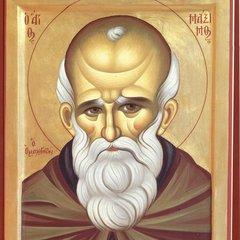
Maximus the Confessor

Maximus the Confessor, who lived from 580 to August 13, 662, was a mysterious religious philosopher and theologian. His life and achievements are not well-documented in historical records, but his thoughts have had a profound impact on Christian philosophy. more

You May Also Like

“Many have said much about love, but you will find love itself only if you seek it among the disciples of Christ. For only they have true Love as love's teacher. 'Though I have the gift of prophecy', says St. Paul, 'and know all mysteries and all knowledge? and have no love, it profits me nothing' (I Cor. 13:2-3). He who possesses love possesses God Himself, for 'God is love' (I Jn. 4:8). To Him be glory throughout the ages. Amen.”

“When what has been created in time according to the temporal order has reached maturity, it ceases from natural growth. But when what has been brought about by the knowledge of God through the practice of the virtues has reached maturity, it starts to grow anew. For the end of one stage constitutes the starting point of the next.”

“If... Adam had trusted in God and been nourished from the tree of life (Gn. 2:9)? he would not have set aside the immortality that had been granted. For such immortality is eternally preserved by participation in life, since all life is genuine and preserved by appropriate food. The food of that blessed life is 'the bread that came down from heaven and gives life to the world' (Jn. 6:33), just as the inerrant Word Himself declares about Himself in the Gospels.”

“No benefit comes from a just man's prayer if he who asks for it finds more pleasure in sin than in virtue. For Samuel mourned over Saul when he sinned, but he was not able to obtain God's mercy, for his grief was not supported by the necessary change of life on the part of the sinner. Hence God put an end to the pointless grief of His servant, saying to him, 'How long will you mourn for Saul, seeing I have rejected him from reigning over Israel?' (I Sam. 16:1).”

“... for our sake loosing within Himself the bonds of bodily birth, He granted us through spiritual birth, according to our own volition, power to become children of God instead of children of flesh and blood if we have faith in His Name (cf. Jn. 1:12-13). For the Savior the sequence was, first of all, incarnation and bodily birth for my sake; and so thereupon the birth in the Spirit through baptism, originally spurned by Adam, for the sake of my salvation and restoration by grace, or, to describe it even more vividly, my very remaking.”