Quotessence
Home / Quotes / Quote by Edmund Burke

Quote by Edmund Burke

Work

The Works and Correspondance of the Right Honourable Edmund Burke

The book encompasses a wide range of Burke's political, philosophical, and social writings, offering insight into his thoughts on government, society, and human nature. It also includes his extensive correspondence, providing a glimpse into his personal and professional life. more

Author
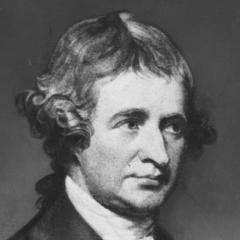
Edmund Burke
Edmund Burke

Edmund Burke, a British statesman and writer, was born on January 12, 1729, and died on July 9, 1797. He was one of the most prominent political thinkers of the 18th century, known for his profound insights into liberty, democracy, and conservatism. more

You May Also Like

“Politics and the pulpit are terms that have little agreement. No sound ought to be heard in the church but the healing voice of Christian charity. The cause of civil liberty and civil government gains as little as that of religion by this confusion of duties. Those who quit their proper character to assume what does not belong to them are, for the greater part, ignorant both of the character they leave and of the character they assume.”

“It is from this absolute indifference and tranquillity of the mind, that mathematical speculations derive some of the most considerable advantages; because there is nothing to interest the imagination; because the judgment sits free and unbiased to examine the point. All proportions, every arrangement of quantity, is alike to the understanding, because the same truths result to it from all; from greater from lesser, from equality and inequality.”

“The objects of a financier are, then, to secure an ample revenue; to impose it with judgment and equality; to employ it economically; and, when necessity obliges him to make use of credit, to secure its foundations in that instance, and for ever, by the clearness and candor of his proceedings, the exactness of his calculations, and the solidity of his funds.”

“Parliament is not a congress of ambassadors from different and hostile interests; which interests each must maintain, as an agent and advocate, against other agents and advocates; but parliament is a deliberative assembly of one nation, with one interest, that of the whole; where, not local purposes, not local prejudices ought to guide, but the general good, resulting from the general reason of the whole. You choose a member indeed; but when you have chosen him, he is not a member of Bristol, but he is a member of parliament.”