Quotessence
Home / Quotes / Quote by Mahatma Gandhi

Quote by Mahatma Gandhi

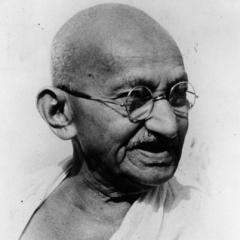
“It is not that I do not get angry. I don't give vent to my anger. I cultivate the quality of patience as angerlessness, and generally speaking, I succeed. But I only control my anger when it comes. How I find it possible to control it would be a useless question, for it is a habit that everyone must cultivate and must succeed in forming by constant practice.”

Quote by Mahatma Gandhi

Work

He Follows Christ

This book delves into the spiritual journey of a devoted follower of Christ, illustrating the challenges and triumphs encountered along the way. The story offers insights into the faith and commitment of the protagonist, providing a personal and reflective look at the Christian life. more

Author

Mahatma Gandhi
Mahatma Gandhi

A leader of the Indian independence movement, lawyer, politician, and social activist, Mahatma Gandhi is revered as the 'Father of the Nation'. He advocated for non-violence and unity between Hindus and Muslims, leading the Indian struggle for independence and profoundly influencing history both in India and around the world. more

You May Also Like

“The participation if women in some armies in the world is in reality only symbolic. The talk about the role of Zionist women in fighting with the combat units of the enemy in the war of 5 June 1967 was intended more as propaganda than anything real or substantial. It was calculated to intensify and compound the adverse psychological effects of the war by exploiting the backward outlook of large sections of Arab society and their role in the community. The intention was to achieve adverse psychological effects by saying to Arabs that they were defeated, in 1967, by women.”

“Wimsey stooped for an empty sardine-tin which lay, horribly battered, at his feet, and slung it idly into the quag. It struck the surface with a noice like a wet kiss, and vanished instantly. With that instinct which prompts one, when depressed, to wallow in every circumstance of gloom, Peter leaned sadly against the hurdles and abandoned himself to a variety of shallow considerations upon (1) The vanity of human wishes; (2) Mutability; (3) First love; (4) The decay of idealism; (5) The aftermath of the Great war; (6) Birth-control; and (7) The fallacy of free-will.”