Quotessence
Home / Quotes / Quote by Frederick Marryat

Quote by Frederick Marryat

Work

The King's Own

Browse quotes and source details for this work. more
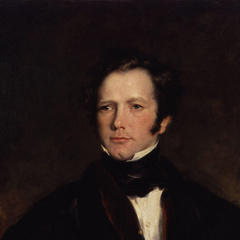
Author

Frederick Marryat
Frederick Marryat

Frederick Marryat was a British writer and naval officer, born on July 10, 1792, and died on August 9, 1848. He is best known for his naval-themed works, particularly the 'Peter' series, which had a profound impact on children's literature. more

You May Also Like

“As spiritual beings, to some extent, we are ever a stranger to normal human life. We are in the world but not of it. When the humanness has diminished enough and the human karma worked through enough, the alone feeling evaporates, never to return. In fact, it becomes apparent that it would be impossible to ever feel alone again as one is intimately connected to a thriving life-force. We feel intrinsically related to everyone. We have a deep solitariness but we can never be lonely because there can no longer be any separation from God. We are more a part of humanity than ever before because we see all as of God. We are all here together, joined irrevocably in the evolution of humanity both individually and collectively.”

“Retirement can be the loneliest period in life. It is a period in which one suddenly feels irrelevant and like an outcast. Many people only exist insofar as their connection to or validation through their work. Millions of Americans, for the sake of making living, they cannot even afford nurturing relationships with family and friends. Their work schedules keep them totally isolated and lonely. By the time they retire, it suddenly dawns on them that they almost have nobody left now that their coworkers are history.”

“Two men may talk together enthusiastically for an hour or so about shared experiences, and yet not have a true conversation. A lonely man who wants to indulge his nostalgic mood feels the need of someone with whom to share it. When he finds such a companion, he starts to pour out his monologue as though recounting a dream. And so the talk goes on between them, their monologues alternating, but after a time they suddenly become aware that they have nothing to say to each other. They are like two men standing at either side of a chasm, the bridge across which has been destroyed.”

“They clung to the purple moors behind and around their dwelling - to the hollow vale into which wound between fern-bank first, and then amongst a few of the wildest little pasture that ever bordered a wilderness of heath, or gave sustenance to a flock of grey moorland sheep, with their little mossy-faced lambs: - they clung to this scene, I say, with a perfect enthusiasm of attachment. I could comprehend the feeling, and share both its strength and truth. I saw the fascination of the locality. I felt the consecration of its loneliness: my eye feasted on the outline of swell and sweep - on the wild colouring communicated to ridge and dell by moss, by heath-bell, by flower-sprinkled turf, by brillant bracken, and mellow granite crag.”