Quotessence
Home / Quotes / Quote by Michael Lind

Quote by Michael Lind

“Page 204: In an 1848 address, he (Karl Marx) observed: "Generally speaking, the Protective system in these days is conservative, while the Free Trade system works destructively. It breaks up old nationalities and carries antagonism of proletariat and bourgeoisie to the uttermost point. In a work, the Free Trade system hastens the Social Revolution. In this revolutionary sense alone, gentlemen, I am in favor of Free Trade." … the neo-fascist right is more likely than the cosmopolitan left to benefit from erosion of living standards by free-market globalism. Laissez-faire globalism may breed its own nemesis, in the form of the most radical and destructive kinds of ethnic nationalism and economic statism.”

Quote by Michael Lind

Work

Author

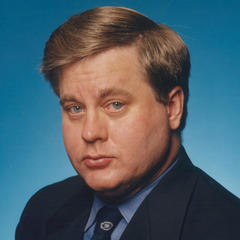
Michael Lind
Michael Lind

Michael Lind, born on April 23, 1962, is an American writer known for his works on political, economic, and social issues. His writings are renowned for their profound analysis and unique insights. more

You May Also Like

“Quoting page 99-101: The opening of unregulated foreign trade causes a general shift of production and jobs to the low-wage nations. They experience a rapid rise in production of advanced goods and in the availability of skill-developing and high-paid jobs, rapidly build new factories, and experience a rapid upgrading in their jobs, economic capabilities, and income. The other side of these benefits to the low-income nations is the corresponding damage to the high-income nations, that are losing the industries and jobs that these nations are gaining. The high-income nations experience an excess of imports over exports, a decline in production of advanced goods and in the availability of skill-developing and high-paid jobs, suffer a decline and obsolescence in their industrial plant, and a downgrading in their available jobs, economic capabilities, and income. This pattern of trade is anomalous not only because it calls on the high-income nations to acquiesce in their own economic decline, but because it points toward a world-wide failure or collapse. The low-income nations are betting their futures on continued increases in sales of advanced goods in the markets of the high-income nations--but these markets are being undermined by the economic decline of the high-income nations. If the low-income nations have a very large population, and especially if any of the nations in the unregulated-trade group have rapid rates of population-growth, the end result of the process will be that there will be no high-income nations anywhere and no substantial market for advanced goods. In the end, all nations are dragged down. The rise in the low-income nations cannot be extrapolated into the future, for it destroys the conditions by which it is temporarily supported. ... The final effects on the standard of living of the high-income nation of unregulated foreign trade are similar to the effects of its permitting unlimited immigration. The shifting of the jobs to the low-wage nation has the same effects as the shifting of excessive numbers of workers to the high-wage nation.”

“[The right-wing populist] narrative centres around division: dividing the world into the virtuous and non-virtuous. Convincing an electoral majority that they are among the virtuous, and that the non-virtuous - that is, free trade, China, migrants and refugees, and those who would impose meaningful action on climate change - need to be dealt with via tough policies. This right-wing populism turbocharges identity and grievance politics and weaponises it through the amplifying support of both social media and elements of the traditional mainstream media. (p.20-21)”

“Once you understand the economics of the Austrian School and the philosophy of liberty in the tradition of Rothbard, you never look at anything – not the state, the media, the central bank, the political class, nothing – the same way again.”

“In spite of its alluring name, the welfare state stands or falls by compulsion. It is compulsion imposed upon us with the state’s power to punish noncompliance. Once this is clear, it is equally clear that the welfare state is an evil the same as every restriction of freedom.”

“[Free trade agreements] are trade agreements that don't stick to trade…they colonize environmental labor, and consumer issues of grave concern (in terms of health safety, and livelihoods too) to many, many hundreds of millions of people - and they do that by subordinating consumer, environmental, and labor issues to the imperatives and the supremacy of international commerce. That is exactly the reverse of how democratic societies have progressed, because over the decades they've progressed by subordinating the profiteering priorities of companies to, say, higher environmental health standards; abolition of child labor; the right of workers to have fair worker standards…and it's this subordination of these three major categories that affect people's lives, labor, environment, the consumer, to the supremacy and domination of trade; where instead of trade getting on its knees and showing that it doesn't harm consumers - it doesn't deprive the important pharmaceuticals because of drug company monopolies, it doesn't damage the air and water and soil and food (environmentally), and it doesn't lacerate the rights of workers - no, it's just the opposite: it's workers and consumers and environments that have to kneel before this giant pedestal of commercial trade and prove that they are not, in a whole variety of ways, impeding international commerce…so this is the road to dictatorial devolution of democratic societies: because these trade agreements have the force of law, they've got enforcement teeth, and they bypass national courts, national regulatory agencies, in ways that really reflect a massive, silent, mega-corporate coup d'etat…that was pulled off in the mid-1990's.”