Quotessence
Home / Quotes / Quote by Dietrich Bonhoeffer

Quote by Dietrich Bonhoeffer

“Blessed are the merciful, for they shall obtain mercy.' These men without possessions or power, these strangers on Earth, these sinners, these followers of Jesus, have in their life with him renounced their own dignity, for they are merciful. As if their own needs and their own distress were not enough, they take upon themselves the distress and humiliation of others. They have an irresistible love for the down-trodden, the sick, the wretched, the wronged, the outcast and all who are tortured with anxiety. They go out and seek all who are enmeshed in the toils of sin and guilt. No distress is too great, no sin too appalling for their pity. If any man falls into disgrace, the merciful will sacrifice their own honour to shield him, and take his shame upon themselves.”

Quote by Dietrich Bonhoeffer

Work

The Cost of Discipleship

This book delves into the profound implications of following Christ, emphasizing the transformative nature of commitment and the challenges faced by believers in their spiritual journey. more

Author
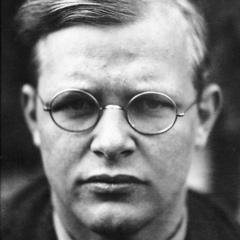
Dietrich Bonhoeffer
Dietrich Bonhoeffer

German pastor, theologian, philosopher, and member of the resistance against the Nazis. Born on February 4, 1906, in Germany, he was executed on April 9, 1945 in a concentration camp. more

You May Also Like

“One of the effects of original sin is an instinctive prejudice in favour of our own selfish desires. We see things as they are not, because we see them centered on ourselves. Fear, anxiety, greed, ambition and our hopeless need for pleasure all distort the image of reality that is reflected in our minds. Grace does not completely correct this distortion all at once: but it gives us a means of recognizing and allowing for it. And it tells us what we must do to correct it. Sincerity must be bought at a price: the humility to recognize our innumerable errors, and fidelity in tirelessly setting them right.”

“I could keep him in place with the weight of a fingertip, I think. Very gently, very carefully, I curl the hand on his chest into the fabric of his biosuit, tugging him ever so slowly toward me. My cheeks are streaked with dried tears, and I can see every shade of violet in his eyes, the line of blood across his cheek where a shard of the exploding Trigger cut it. And as our helmets touch, we’re so close I can count his eyelashes. And he holds still for me. “I don’t know what comes next,” I say softly. “But why don’t we see where this path leads us? Let’s just find out together.”

“He eagerly suffered for us when we were failing, as orphans. Will he cross his arms over our failures now that we are his adopted children? His heart was gentle and lowly toward us when we were lost. Will his heart be anything different toward us now that we are found? While we were still...He loved us in our mess then. He'll love us in our mess now. Our very agony in sinning is the fruit of our adoption. A cold heart would not be bothered. We are not who we were.”

“Whether plagues are managed quickly doesn't just depend on hardworking doctors and scientists. It depends on people who like to sleep in on weekends and watch movies and eat French fries and do the fantastic common things in life, which is to say, it depends on all of us. Whether a civilization fares well during a crisis has a great deal to do with how the ordinary, nonscientist citizen responds. A lot of the measures taken against plagues discussed in this book will seem stunningly obvious. You should not, for instance, decide diseased people are sinners and burn them at a literal or metaphorical stake, because it is both morally monstrous and entirely ineffective. But them a new plague crops up, and we make precisely the same mistakes we should have learned from three hundred years ago.”