“A dependence on the people is, no doubt, the primary control on the government; but experience has taught mankind the necessity of auxiliary precautions.”
Quote by James Madison
Work
Selected Writings of James Madison
Comprising a range of Madison's works, the book delves into his thoughts on constitutional law, federalism, and the rights of citizens. It includes key documents such as the Federalist Papers, which he co-authored, and offers insights into his role in shaping the American political landscape. more
Author
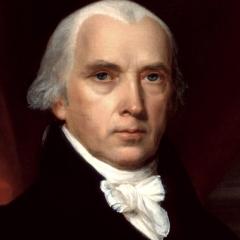
James Madison
James Madison, the 4th President of the United States, was born on March 16, 1751, and died on June 28, 1836. He was a key figure in drafting the U.S. Constitution and had a profound impact on the political system of the United States. more
You May Also Like
Source: The Federalist, on the New Constitution, Written in the Year 1788
Source: The Federalist on the New Constitution
Source: The Writings of George Washington: Being His Correspondence, Addresses, Messages, and Other Papers, Official and Private
Source: The Fœderalist: A Collection of Essays, Written in Favor of the New Constitution, as Agreed Upon by the Fœderal Convention, September 17, 1787. Reprinted from the Original Text. With an Historical Introduction and Notes
Source: The Federalist on the New Constitution
Source: Citizen Paine: Thomas Paine's Thoughts on Man, Government, Society, and Religion
Source: The Complete Writings of Thomas Paine
Source: Citizen Paine: Thomas Paine's Thoughts on Man, Government, Society, and Religion
Source: Common Sense, The Crisis, & Other Writings from the American Revolution: (Library of America Paperback Classic)
Source: The Federalist, on the New Constitution, Written in the Year 1788