Quotessence
Home / Quotes / Quote by Walter Pater

Quote by Walter Pater

“Poetry, at all times, exercises two distinct functions: it may reveal, it may unveil to every eye, the ideal aspects of common thingsor it may actually add to the number of motives poetic and uncommon in themselves, by the imaginative creation of things that are ideal from their very birth.”

Quote by Walter Pater

Author
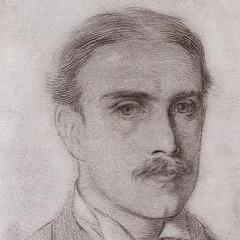
Walter Pater
Walter Pater

Walter Pater was a British essayist, critic, and poet, known for his influential literary criticism and contributions to the Aesthetic Movement. Born on August 4, 1839, and died on July 30, 1894, Pater's work had a significant impact on the development of modern literary theory and the appreciation of art and literature. more

You May Also Like

“That the mere matter of a poem, for instance--its subject, its given incidents or situation; that the mere matter of a picture--the actual circumstances of an event, the actual topography of a landscape--should be nothing without the form, the spirit of the handling, that this form, this mode of handling, should become an end in itself, should penetrate every part of the matter;Mthis is what all art constantly strives after, and achieves in different degrees.”

“It is with a rush of home-sickness that the thought of death presents itself.... Such sentiment is the eternal stock of all religions, modified indeed by changes of time and place, but indestructible, because its root is so deep in the earth of man's nature. The breath of religious initiators passes over them; a few "rise up with wings as eagles" [Isaiah 40:31], but the broad level of religious life is not permanently changed. Religious progress, like all purely spiritual progress, is confined to a few.”

“The base of all artistic genius is the power of conceiving humanity in a new, striking, rejoicing way, of putting a happy world ofits own creation in place of the meaner world of common days, of generating around itself an atmosphere with a novel power of refraction, selecting, transforming, recombining the images it transmits, according to the choice of the imaginative intellect. In exercising this power, painting and poetry have a choice of subject almost unlimited.”

“For us necessity is not as of old an image without us, with whom we can do warfare; it is a magic web woven through and through us, like that magnetic system of which modern science speaks, penetrating us with a network subtler than our subtlest nerves, yet bearing in it the central forces of the world.”

“To higher or lower ends, they [the majority of mankind] move too often with something of a sad countenance, with hurried and ignoble gait, becoming, unconsciously, something like thorns, in their anxiety to bear grapes; it being possible for people, in the pursuit of even great ends, to become themselves thin and impoverished in spirit and temper, thus diminishing the sum of perfection in the world, at its very sources.”

“I have no other pictures of the world apart from those which express evanescence, and callousness, vanity and anger, emptiness, orhideous useless hate. Everything has merely confirmed what I had seen and understood in my childhood: futile and sordid fits of rage, cries suddenly blanketed by the silence, shadows swallowed up for ever by the night.”

“For me, it is as though at every moment the actual world had completely lost its actuality. As though there was nothing there; asthough there were no foundations for anything or as though it escaped us. Only one thing, however, is vividly present: the constant tearing of the veil of appearances; the constant destruction of everything in construction. Nothing holds together, everything falls apart.”