“He who hath many friends hath none.”
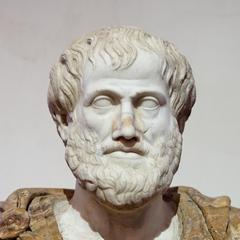
Quote by Aristotle
Work
Wit and Wisdom of Socrates, Plato, Aristotle: Being a Treasury of Thousands of Glorious, Inspiring and Imperishable Thoughts, Views and Observations of the Three Great Greek Philosophers, Classified Under about Four Hundred Subjects for Comparative Study
This book is a curated compilation of the notable ideas and teachings of Socrates, Plato, and Aristotle. It includes a vast array of their philosophical musings, categorized into around four hundred distinct subjects. The aim is to facilitate a comparative study of the intellectual contributions of these three influential Greek philosophers, offering readers a deeper understanding of their work and its relevance across various disciplines. more
Author
You May Also Like
“I always wanted to be the outlaw. And that's to a certain extent how I've lived.”
Source: Entropy and Art: An Essay on Disorder and Order
Source: Discourses on Painting and the Fine Arts, delivered at the Royal Academy. With a portrait
Source: THE TERRITORIAL IMPERATIVE
Source: AFRICAN GENISIS
“Beyond a wholesome discipline, be gentle with yourself.”
Source: Desiderata: A Survival Guide for Life