Quotessence
Home / Quotes / Quote by Craig Raine

Quote by Craig Raine

“In his autobiography Stravinsky relates that the first music he remembers was made by a peasant, working his hand in his armpit to produce a rhytmic farting.”

Quote by Craig Raine

Work

Heartbreak

Browse quotes and source details for this work. more
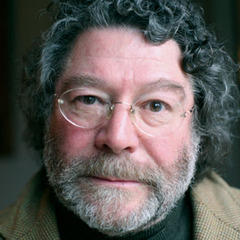
Author

Craig Raine
Craig Raine

Craig Raine is a British poet born on December 3, 1944. His poetry is known for its unique style and profound themes, widely regarded as an important representative of British poetry in the second half of the 20th century. more

You May Also Like

“I glanced over and saw Wyatt glaring at me. Journey’s “Lovin’ Touchin’, Squeezin’” was playing on the radio. “What?” I asked. “You secretly hate me, don’t you.” He gestured toward the radio. “You can’t stand the thought of me taking a much needed nap and leaving you to drive without conversation. You’re torturing me with this sappy stuff.” “It’s Journey. I love this song.” Wyatt mumbled something under his breath, picked up the CD case, and started looking through it. He paused with a choked noise, his eyes growing huge. “You’re joking, Sam. Justin Bieber? What are you, a twelve-year old girl?” There’s gonna be one less lonely girl, I sang in my head. That was a great song. How could he not like that song? Still, I squirmed a bit in embarrassment. “A twelve-year old girl gave me that CD,” I lied. “For my birthday.” Wyatt snorted. “It’s a good thing you’re a terrible liar. Otherwise, I’d be horrified at the thought that a demon has been hanging out with a bunch of giggling pre-teens.” He continued to thumb through the CDs. “Air Supply Greatest Hits? No, no, I’m wrong here. It’s an Air Supply cover band in Spanish.” He waved the offending CD in my face. “Sam, what on earth are you thinking? How did you even get this thing?” “Some tenant left it behind,” I told him. “We evicted him, and there were all these CDs. Most were in Spanish, but I’ve got a Barry Manilow in there, too. That one’s in English.” Wyatt looked at me a moment, and with the fastest movement I’ve ever seen, rolled down the window and tossed the case of CDs out onto the highway. It barely hit the road before a semi plowed over it. I was pissed. “You asshole. I liked those CDs. I don’t come over to your house and trash your video games, or drive over your controllers. If you think that will make me listen to that Dubstep crap for the next two hours, then you better fucking think again.” “I’m sorry Sam, but it’s past time for a musical intervention here. You can’t keep listening to this stuff. It wasn’t even remotely good when it was popular, and it certainly hasn’t gained anything over time. You need to pull yourself together and try to expand your musical interests a bit. You’re on a downward spiral, and if you keep this up, you’ll find yourself friendless, living in a box in a back alley, stinking of your own excrement, and covered in track marks.” I looked at him in surprise. I had no idea Air Supply led to lack of bowel control and hard core drug usage. I wondered if it was something subliminal, a kind of compulsion programmed into the lyrics. Was Russell Hitchcock a sorcerer? He didn’t look that menacing to me, but sorcerers were pretty sneaky. Even so, I was sure Justin Bieber was okay. As soon as we hit a rest stop, I was ordering a replacement from my iPhone.”

“There isn't a better feeling in the world—not an orgasm, not a first kiss, not even that glorious soaring sensation you get when those first few notes of a new song pierce your chest and fill your whole body with absolute bliss—than acknowledgment that your mix tape was not only received and played but enjoyed. It's a dance of sorts, balancing songs you think the listener will love while trying to say everything that otherwise dries up in your throat before you can get out the words.”

“As early as 1930 Schoenberg wrote: "Radio is an enemy, a ruthless enemy marching irresistibly forward, and any resistance is hopeless"; it "force-feeds us music . . . regardless of whether we want to hear it, or whether we can grasp it," with the result that music becomes just noise, a noise among other noises. Radio was the tiny stream it all began with. Then came other technical means for reproducing, proliferating, amplifying sound, and the stream became an enormous river. If in the past people would listen to music out of love for music, nowadays it roars everywhere and all the time, "regardless whether we want to hear it," it roars from loudspeakers, in cars, in restaurants, in elevators, in the streets, in waiting rooms, in gyms, in the earpieces of Walkmans, music rewritten, reorchestrated, abridged, and stretched out, fragments of rock, of jazz, of opera, a flood of everything jumbled together so that we don't know who composed it (music become noise is anonymous), so that we can't tell beginning from end (music become noise has no form): sewage-water music in which music is dying.”

“Had Kurt Cobain not committed suicide in 1994, would his genius have survived the continuous incisions of a media that was only too proud of its ability to chisel away at his fragile psyche in the years before he decided that he'd had enough off their invasions? And, had Jimi Hendrix not passed way in 1970, would he, too have eventually fallen into decline, first equalled, then eclipsed by the brilliant wave of new guitarists: Robin Trower, Ritchie Blackmore, Mick Ronson, who emerged during the early 1970s? In death, Hendrix led by example: in life he could have been left for the dead.”