Quotessence
Home / Quotes / Quote by Selma Fraiberg

Quote by Selma Fraiberg

“The child begins life as a pleasure-seeking animal; his infantile personality is organized around his own appetites and his own body. In the course of his rearing the goal of exclusive pleasure seeking must be modified drastically, the fundamental urges must be subject to the dictates of conscience and society, urges must be capable of postponement and in some instances of renunciation completely.”

Quote by Selma Fraiberg

Work

The Magic Years: Understanding and Handling the Problems of Early Childhood

This book delves into the complexities of early childhood, providing a detailed exploration of the developmental stages and common issues faced by children in their early years. It aims to assist parents and caregivers in understanding and effectively managing the unique challenges of this period of life. more

Author
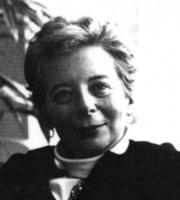
Selma Fraiberg
Selma Fraiberg

Selma Fraiberg (March 8, 1918 - December 19, 1981) was an American psychologist and author. Her book 'The Magic Years' had a profound impact on the field of child psychology. more

You May Also Like

“A method of child-rearing is not--or should not be--a whim, a fashion or a shibboleth. It should derive from an understanding of the developing child, of his physical and mental equipment at any given stage, and, therefore, his readiness at any given stage to adapt, to learn, to regulate his behavior according to parental expectations.”

“It is confidently expected that the period is at hand, when man, through ignorance, shall not much longer inflict unnecessary misery on man; because the mass of mankind will become enlightened, and will clearly discern that by so acting they will inevitably create misery to themselves.”

“The meaning of the living words that come out of the experiences of great hearts can never be exhausted by any one system of logical interpretation. They have to be endlessly explained by the commentaries of individual lives, and they gain an added mystery in each new revelation.”

“That so many writers have been prepared to accept a kind of martyrdom is the best tribute that flesh can pay to the living spirit of man as expressed in his literature. One cannot doubt that the martyrdom will continue to be gladly embraced. To some of us, the wresting of beauty out of language is the only thing in the world that matters.”

“In the theater the audience is generally riveted to a single angle of observation. The movie director, though, can rapidly shift from objective to subjective--and to any number of subjective points of view--and in so doing seem to pull the audience directly inside the frame of his picture, giving the spectator the sense of experiencing an action from the viewpoint of a participant. Identification of the viewer with the film character, then, can be much more intimate than the analogous situation in the theater.”