Quotessence
Home / Quotes / Quote by Vladimir Nabokov

Quote by Vladimir Nabokov

“The organs concerned in the production of English speech sounds are the larynx, the velum, the lips, the tongue (that punchinello in the troupe), and, last but not least, the lower jaw; mainly upon its overenergetic and somewhat ruminant motion did Pnin rely when translating in class passages in the Russian grammar or some poem by Pushkin. If his Russian was music, his English was murder.”

Quote by Vladimir Nabokov

Book:Pnin

Work

Pnin

Vladimir Nabokov's 'Pnin' is a satirical novel that follows the life of Professor Pnin, a Russian immigrant who teaches at an American college. The story is characterized by its wit and absurdity, offering a humorous look at the challenges faced by Pnin in his new environment. more

Author

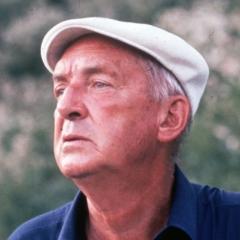
Vladimir Nabokov
Vladimir Nabokov

Russian-born American novelist, best known for his novel 'Lolita'. Nabokov is renowned for his unique literary style and profound use of language and symbolism. more

You May Also Like

“It’s like I’m suddenly a hormonally charged teenager or living in a bad romance novel: I suddenly can’t stop myself from noticing every man around me. Which means that Darcy, Samantha, and Michael are probably right. Plus, there was that disturbing dream about Voldemort this morning. I need to lose my gay-husband virginity before I lose my mind entirely. I need to find someone to sleep with me. And the fact that I don’t have the faintest idea how to make that happen is just further proof that it needs to. —SINGLE-MINDED”

“Whenever I'm in the company of strangers and speak in a way that reveals my Slav accent, the question follows: "Where are you from?" I always reply politely. It's very important to me that I say exactly where I'm from, and explain where that place is in case the person I'm talking to has never hears of my country ("in Europe, near Italy"). I suppose that's the need in me to feel accepted for what I am.”

“i have often wondered what resides in an accent. is it a presence - an identity, a trajectory, a history? or is it rather an absence - an estrangement, a withdrawal, a blank space refusing to be filled? and are we immigrants synonymous to our accents? or are we, or can we ever aspire to be, more than that? this is not to deny that our accents are fundamentally important to who we are, and they are near and dear to our hearts. they are an inextricable trace of the paths we have travelled, the loves we have loved and never forgotten, the scars we still carry and which still hurt. but that doesn't mean we are from our accents.”