“Owing to the identification of religion with virtue, together with the fact that the most religious men are not the most intelligent, a religious education gives courage to the stupid to resist the authority of educated men, as has happened, for example, where the teaching of evolution has been made illegal. So far as I can remember, there is not one word in the Gospels in praise of intelligence; and in this respect ministers of religion follow gospel authority more closely than in some others.”
Quote by Bertrand Russell
Work
Education and the Social Order
This book delves into the intricate connections between educational systems and the broader social order, exploring how educational policies and practices influence and are influenced by societal structures and norms. more
Author
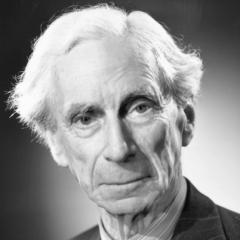
Bertrand Russell
Bertrand Russell was a British philosopher, mathematician, and logician born on May 18, 1872, and died on February 2, 1970. He is known for his contributions to logic and mathematics, particularly in the fields of mathematical logic and philosophical analysis. His works spanned a wide range of subjects, including ethics, political philosophy, history, and literary criticism. more
You May Also Like
Source: In praise of idleness: and other essays
Source: Russell on Ethics: Selections from the Writings of Bertrand Russell
Source: Human Knowledge: Its Scope and Value
Source: The Autobiography of Bertrand Russell
Source: Man's Peril, 1954-55
Source: Mortals and Others
“How much good it would do if one could exterminate the human race.”
Source: Introduction to Mathematical Philosophy
Source: An Outline of Philosophy