Quotessence
Home / Quotes / Quote by George Henry Lewes

Quote by George Henry Lewes

“In urging all writers to be steadfast in reliance on the ultimate victory of excellence, we should no less strenuously urge upon them to beware of the intemperate arrogance which attributes failure to a degraded condition of the public mind. The instinct which leads the world to worship success is not dangerous. The book which succeeds accomplishes its aim. The book which fails may have many excellencies, but they must have been misdirected.”

Quote by George Henry Lewes

Work

The Principles of Success in Literature

This book delves into the fundamental principles and strategies necessary for success in literature, offering insights and advice for aspiring writers and scholars. more

Author
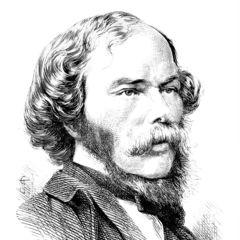
George Henry Lewes
George Henry Lewes

George Henry Lewes was a British philosopher, literary critic, and writer. Born on April 18, 1817, and died on November 28, 1878, Lewes is known for his contributions to moral philosophy, aesthetics, and literary criticism. more

You May Also Like

“Whatever lies beyond the limits of experience, and claims another origin than that of induction and deduction from established data, is illegitimate.”

“"There is one basis of science," says Descartes, "one test and rule of truth, namely, that whatever is clearly and distinctly conceived is true." A profound psychological mistake. It is true only of formal logic, wherein the mind never quits the sphere of its first assumptions to pass out into the sphere of real existences; no sooner does the mind pass from the internal order to the external order, than the necessity of verifying the strict correspondence between the two becomes absolute. The Ideal Test must be supplemented by the Real Test, to suit the new conditions of the problem.”

“Roger_Bacon" title="Roger Bacon">Roger Bacon expressed a feeling which afterwards moved many minds, when he said that if he had the power he would burn all the works of the Stagirite, since the study of them was not simply loss of time, but multiplication of ignorance. Yet in spite of this outbreak every page is studded with citations from Aristotle, of whom he everywhere speaks in the highest admiration.”

“Roger Bacon, a disciple of the Arabs, also insisted on the primary necessity of Mathematics, without which no other science can be known; yet by Mathematics it is clear that he meant something very different from what we mean, including under that head even dancing, singing, gesticulation, and performance on musical instruments.”

“Science as we now understand the word is of later birth. If its germinal origin may be traced to the early period when Observation, Induction, and Deduction were first employed, its birth must be referred to that comparatively recent period when the mind, rejecting the primitive tendency to seek in supernatural agencies for an explanation of all external phenomena, endeavoured, by a systematic investigation of the phenomena themselves to discover their invariable order and connection.”

“The separation of Science from Knowledge was effected step by step as the Subjective Method was replaced by the Objective Method: i.e., when in each inquiry the phenomena of external nature ceased to be interpreted on premisses suggested by the analogies of human nature.”

“He who is ignorant of Motion, says Aristotle , is necessarily ignorant of all natural things. ...Not only was he entirely in the dark respecting the Laws, he was completely wrong in his conception of the nature of Motion. ...He thought that every body in motion naturally tends to rest.”

“The spontaneous tendency to invoke a Final Cause in explanation of every difficulty is characteristic of metaphysical philosophy. It arises from a general tendency towards the impersonation of abstractions which is visible throughout History.”

“To his [ Plato's ] great disappointment, he found Anaxagoras adducing simple physical reasons, instead of the teleological reasons, which he had expected. Such a teacher could no longer allure him.”