Quotessence
Home / Quotes / Quote by Ambrose Bierce

Quote by Ambrose Bierce

Work

The Devil's Dictionary: The Devil World

This book is a compilation of satirical definitions, offering a humorous and critical take on a wide range of words and ideas, all presented from the viewpoint of a devil. The entries are known for their wit and sarcasm, challenging the reader's understanding of common terms and concepts. more

Author
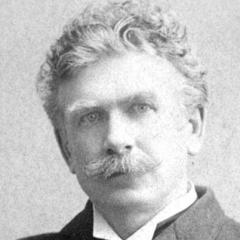
Ambrose Bierce
Ambrose Bierce

Ambrose Bierce was an American journalist, satirist, and editor, renowned for his sharp wit and dark humor. He is best known for his satirical novel 'The Devil's Dictionary' and his short stories. Bierce was born on June 24, 1842, and his exact date of death remains unknown, as he disappeared during the American Civil War. more

You May Also Like

“GOOSE, n. A bird that supplies quills for writing. These, by some occult process of nature, are penetrated and suffused with various degrees of the bird's intellectual energies and emotional character, so that when inked and drawn mechanically across paper by a person called an "author," there results a very fair and accurate transcript of the fowl's thought and feeling. The difference in geese, as discovered by this ingenious method, is considerable: many are found to have only trivial and insignificant powers, but some are seen to be very great geese indeed.”

“GRAVITATION, n. The tendency of all bodies to approach one another with a strength proportioned to the quantity of matter they contain-the quantity of matter they contain being ascertained by the strength of their tendency to approach one another. This is a lovely and edifying illustration of how science, having made A the proof of B, makes B the proof of A.”

“GUNPOWDER, n. An agency employed by civilized nations for the settlement of disputes which might become troublesome if left unadjusted. By most writers the invention of gunpowder is ascribed to the Chinese, but not upon very convincing evidence. Milton says it was invented by the devil to dispel angels with, and this opinion seems to derive some support from the scarcity of angels.”

“HIBERNATE, v. i. To pass the winter season in domestic seclusion. There have been many singular popular notions about the hibernation of various animals. Many believe that the bear hibernates during the whole winter and subsists by mechanically sucking its paws. It is admitted that it comes out of its retirement in the spring so lean that it has to try twice before it can cast a shadow.”

“LEAD, n. A heavy blue-gray metal much used ... as a counterpoise to an argument of such weight that it turns the scale of debate the wrong way. An interesting fact in the chemistry of international controversy is that at the point of contact of two patriotisms lead is precipitated in great quantities.”

“LIVER, n. A large red organ thoughtfully provided by nature to be bilious with. The sentiments and emotions which every literary anatomist now knows to haunt the heart were anciently believed to infest the liver; and even Gascoygne, speaking of the emotional side of human nature, calls it "our hepaticall parte." It was at one time considered the seat of life; hence its name- liver, the thing we live with.”