“I have always strenuously supported the right of every man to his own opinion, however different that opinion might be to mine. He who denies to another this right, makes a slave of himself to his present opinion, because he precludes himself the right of changing it.”
Quote by Thomas Paine
Work
The Thomas Paine Collection: Common Sense, Rights of Man, Age of Reason, An Essay on Dream, Biblical Blasphemy, Examination Of The Prophecies
This collection brings together several key writings by Thomas Paine, a prominent figure of the Enlightenment era. It includes 'Common Sense,' which argued for American independence from British rule; 'Rights of Man,' a defense of the French Revolution and critique of monarchy; 'The Age of Reason,' a deistic examination of organized religion and the Bible; 'An Essay on Dream,' a short piece on the nature of dreams; 'Biblical Blasphemy,' a critical analysis of biblical texts; and 'Examination of the Prophecies,' a scrutiny of biblical prophecies. The volume offers readers access to Paine's rationalist and revolutionary ideas that influenced political and religious thought in the late 18th century. more
Author
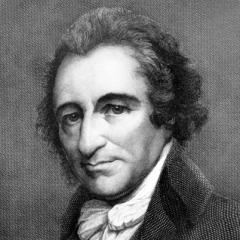
Thomas Paine
Thomas Paine, born on February 9, 1737, and died on June 8, 1809, was a prominent American writer, political figure, and philosopher during the American Revolutionary War. He is renowned for his radical democratic ideas and his contributions to the American independence movement. more
You May Also Like
“Religious moderation is the product of secular knowledge and scriptural ignorance.”
Source: The End of Faith: Religion, Terror, and the Future of Reason
Source: Autobiographies
Source: The Second World War
Source: The Theological Works of Thomas Paine: The Most Complete Edition Ever Published
Source: Memoirs, 4: Correspondence and Private Papers
“Reality provides us with facts so romantic that imagination itself could add nothing to them.”
Source: An Enquiry Concerning Human Understanding: Revision of Great Book