Quotessence
Home / Quotes / Quote by Winona LaDuke

Quote by Winona LaDuke

Author

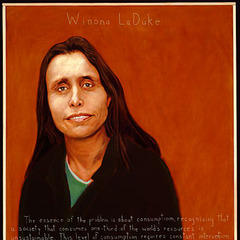
Winona LaDuke
Winona LaDuke

Winona LaDuke is an American activist and a prominent figure in the environmental and Native American rights movements. Born on August 18, 1959, she has dedicated her life to advocating for indigenous peoples and sustainable living, working on issues such as environmental degradation and the protection of indigenous lands. more

You May Also Like

“Of all the problems of conservation, none is more urgent that the polluted air which endangers the American people. We have been fortunate so far. But we have seen that when winds fail to blow, the concentrations of poisonous clouds over our cities can become perilous.”

“Air pollution is a threat to health, especially of older persons. It contributes significantly to the rising rates of chronic respiratory ailments. It stains our cities and towns with ugliness, soiling and corroding whatever it touches. Its damage extends to our forests and farmlands as well. The economic toll for our neglect amounts to billions of dollars each year.”

“One third of all of our cancers are from tobacco. It's one of the big killers in America and more than half of our kids still have environmental tobacco smoke exposure when environmental tobacco smoke is known to be associated with sudden infant death syndrome, with ear infections, respiratory infections and the rest. If we had to pick something to really go after, that would be one that I would really argue is an extraordinarily high priority and something people can actually do something about.”

“The "developed" nations had given to the "free market" the status of a god, and were sacrificing to it their farmers, farmlands, and communities, their forests, wetlands, and prairies, their ecosystems and watersheds. They had accepted universal pollution and global warming as normal costs of doing business.”

“The nuclear peril is usually seen in isolation from the threats to other forms of life and their ecosystems, but in fact it should be seen at the very center of the ecological crisis, as the cloud-covered Everest of which the more immediate, visible kinds of harm to the environment are the mere foothills.”