Quotessence
Home / Quotes / Quote by Charles Darwin

Quote by Charles Darwin

Work

The Works of Charles Darwin, Volume 28: The Formation of Vegetable Mould Through the Action of Worms With Observations on Their Habits

The book delves into the scientific study of how worms contribute to the development of vegetable soil, offering detailed insights into the behavior and ecological impact of these creatures. more

Author
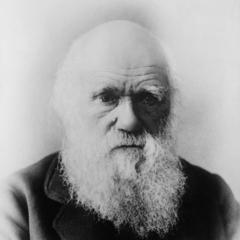
Charles Darwin
Charles Darwin

Charles Darwin, a British naturalist, is renowned as the founder of evolutionary biology. Born on February 12, 1809, in England, he passed away on April 19, 1882. Darwin is best known for his research on the theory of evolution, which proposed that species evolve through natural selection and survival of the fittest. more

You May Also Like

“In order that the relations between science and the age may be what they ought to be, the world at large must be made to feel that science is, in the fullest sense, a ministry of good to all, not the private possession and luxury of a few, that it is the best expression of human intelligence and not the abracadabra of a school, that it is a guiding light and not a dazzling fog.”

“Intelligence is a valuable thing, but it is not usually the key to survival. Sheer fecundity ... usually counts. The intelligent gorilla doesn't do as well as the less intelligent but more-fecund rat, which doesn't do as well as the still-less-intelligent but still-more-fecund cockroach, which doesn't do as well as the minimally-intelligent but maximally-fecund bacterium.”

“Intelligence is an extremely subtle concept. It's a kind of understanding that flourishes if it's combined with a good memory, but exists anyway even in the absence of good memory. It's the ability to draw consequences from causes, to make correct inferences, to foresee what might be the result, to work out logical problems, to be reasonable, rational, to have the ability to understand the solution from perhaps insufficient information. You know when a person is intelligent, but you can be easily fooled if you are not yourself intelligent.”

“Our purpose is to be able to measure the intellectual capacity of a child who is brought to us in order to know whether he is normal or retarded. ... We do not attempt to establish or prepare a prognosis and we leave unanswered the question of whether this retardation is curable, or even improveable. We shall limit ourselves to ascertaining the truth in regard to his present mental state.”