Quotessence
Home / Quotes / Quote by Barbara Kingsolver

Quote by Barbara Kingsolver

Work

High Tide in Tucson

This book is a compilation of thoughtful essays that delve into the unique environment and culture of the American Southwest, offering insights into the author's observations of nature and the human condition. more
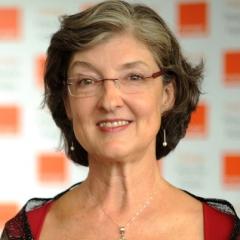
Author

Barbara Kingsolver
Barbara Kingsolver

Barbara Kingsolver is an American novelist known for her insightful social commentary and rich literary imagination. Her works often explore themes of environmental protection, social justice, and women's issues, and have gained widespread popularity. Born on April 8, 1955, in Arkansas, USA, Kingsolver grew up in Arkansas and Mexico, and later earned a BA in literature from Amherst College and an MA in comparative literature from Columbia University. more

You May Also Like

“We started America with the sin of slavery that led right into the post-reconstruction period which was the greatest period of domestic terrorism in our country's history. Then after that, we had Jim Crow emerge and just when the Jim Crow laws were ending came the onslaught of the drug war. Well, the drug war has so perniciously effected, insidiously infected communities of color that in some ways it has come full circle, and we now have more African Americans under criminal supervision than all of the slaves in 1865. This is a profoundly unjust war.”

“I do not believe that marijuana is a gateway drug, and having been a mayor trying to keep my community safe, if there was any drug that was driving violence, more than marijuana, it was alcohol which is legal. And so I just don't think this is a gateway drug. And by the way, if you regulate it you're actually going to overcome a lot of problems with people having to go to the streets to buy their drug. You don't know how dangerous that is.”

“I want you to understand that racial justice is not about justice for those who are black or brown; racial justice is about American justice. Justice for LGBT Americans is not about gay and lesbian justice; it's about American justice. Equality for women isn't about women; it's about United States equality. You cannot enjoy justice anywhere in this country until we make sure there is justice everywhere in this country.”

“I was born in Tehran at a time when women's rights were deteriorating at a rampant rate. My parents didn't want to raise their daughter in a social, political, and religious climate that was growing increasingly oppressive toward women and girls, so they emigrated to London. But the struggle of the Iranian people was permanently etched in my social consciousness from a young age.”

“I'm inspired by strong, courageous women. My mother is the definition of a self-sufficient, independent woman whom I have always looked up to. I also greatly admire incredible women like Aung San Suu Kyi, and human rights attorney Nasrin Sotoudeh, who was wrongfully imprisoned for 4 years in Iran, simply for giving a voice to the voiceless and defending the helpless. And I'm in awe of the young Pakistani student and activist, Malala Yousafzai, for her bravery and resilience in the face of brutal repression.”

“I have a fairly unwieldy set of concerns that go into determining what I do in the paintings, such as the history of the decorative, patterns of cultural migration, Islamic art and design, Byzantine architecture, the annals of natural history, as well as contemporary painting. All of these things are filtered through my own sense of cultural urgency. How I proceed with the work has to do with how I respond to this instinctively chosen mass of materials. I'm weighing many things and making many decisions before I even get started on a painting.”