Quotessence
Home / Quotes / Quote by Etgar Keret

Quote by Etgar Keret

“If you were to do the world championship of victimhood in modern times, then the finals would probably be between Jews and Palestinians. I think the Jews win: we, Isralians, go from the Spanish Inquisition to pogroms to the fake Protocols of the Elders of Zion to World War II and the Holocaust - it's a horrible history. And if you look at the Palestinian world, victimized by every entity in the Middle East, they were massacred in every country. I think that, in Israel, the greatest fear that people have, and I have it, too, is this fear of genocide.”

Quote by Etgar Keret

Author
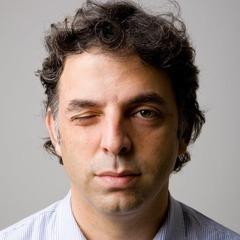
Etgar Keret
Etgar Keret

Etgar Keret is an Israeli writer known for his unique humor and profound emotional depth. His works are typically short stories that explore themes of personal identity, family relationships, and social reality. Born on August 20, 1967, Keret's writing style has been well-received by readers worldwide, with his works translated into multiple languages. more

You May Also Like

“In my kind of reporting work, you don't parachute in after some big, terrible event, which is important and has to be covered, but offers only a glimpse. It's the kind of work in which you ask, what is my understanding of how the world works, and where can I go to see these questions get worked out in individuals' lives? That was really the question for me: whether I had anything to add to what had already been written.”

“As a reporter, you know the tropes of how stories on poverty work in any country. A reporter will go to an NGO and say, "Tell me about the good work that you're doing and introduce me to the poor people who represent the kind of help you give." It serves to streamline the storytelling, but it gives you a lopsided cosmos in which almost every poor person you read about is involved with a NGO helping him. Our understanding of poverty and how people escape from poverty, in any country, is quite distorted.”

“When I pick a story, I'm very much aware of the larger issues that it's illuminating. But one of the things that I, as a writer, feel strongly about is that nobody is representative. That's just narrative nonsense. People may be part of a larger story or structure or institution, but they're still people. Making them representative loses sight of that. Which is why a lot of writing about low-income people makes them into saints, perfect in their suffering.”

“I remember researching a really complicated article and having trouble keeping track of all the different perspectives. I ended up drawing a diagram to help myself follow how the ideas were interrelated. I looked at the diagram when I had finished and thought, "Oh, maybe I don't need to write the article now - maybe I've done my job as a journalist. I can convey my understanding through the diagram."”