Quotessence
Home / Quotes / Quote by Richard Llewellyn

Quote by Richard Llewellyn

“There is no room for pride in any man. There is no room for unkindness. There is no room for wit at the expense of others. All men are born the same, and equal. As you saw to-day, so come the Captains and the Kings and the Tinkers and the Tailors.”

Quote by Richard Llewellyn

Work

HOW GREEN WAS MY VALLEY

This classic novel by Richard Llewellyn delves into the life of a young boy named David, whose family is part of a Welsh coal mining community. The story captures the essence of a bygone era, highlighting the challenges and triumphs of the working class. Set against the backdrop of the industrial revolution, it offers a poignant look at the changes affecting the community and the boy's personal growth. more

Author
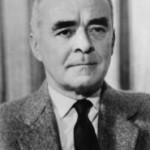
Richard Llewellyn
Richard Llewellyn

Richard Llewellyn was a renowned Welsh novelist, born on December 8, 1906, and passed away on November 30, 1983. His works are known for their vivid portrayal of rural Welsh life, which has won him a wide readership. more

You May Also Like

“You are not who you think you are. You are not who they want you to be. You are not merely your colour, class, gender - and so on - these are quite narrow things. You are not the ideas you are given and gather. You are not what you own or lay claim to. You are not even your life story - for that changes through time, perspective, emphasis and many things. You are what resides before, between and beyond all these things." - R. Ogunlaru”

“My parents didn't settle for the lives their parents lived. They stepped out and up, my father lying his way into the Navy when he was too young to enlist, my mother marrying this fugitive from the mills when she was too young for marriage. A smart guy, he took every course the Navy offered, aced them all, becoming the youngest chief warrant officer in the service. After Pearl Harbor the Navy needed line officers fast and my dad was suddenly wearing gold stripes. My mother watched and learned, getting good at the ways of this new world. She dressed beautifully. Our quarters were always handsomely fitted out. She and Dad were gracious, well-spoken. They were far from rich, but there were books and there was music and sometimes conversations about the world. We even listened to the Metropolitan Opera broadcasts on Saturdays. Still, when I finished high school, their attitudes and the times said that there was little point in further educating a girl. I would take a clerical job until I could find the right junior officer to marry and pursue his career, as helpmeet. If I picked well and worked hard, I might someday be an admiral's wife.”

“What would be wicked would be to say, 'I will not give this person a job because he belongs to this category of people, and there's some kind of statistical tendency for this category of person to be different from that category...' Treat them as individuals! Look at the qualifications of this individual, and forget about the group, race, whatever you want to call it, to which he belongs.”

“In every country the intellectual class is the most influential class. This is the class which can foresee advice and lead. In no country does the mass of the people live the life for intelligent thought and action. It is largely imitative and follows the intellectual class. There is no exaggeration in saying that the entire destination of the country depends upon its intellectual class. If the intellectual class is honest and independent, it can be trusted to take the initiative and give a proper lead when a crisis arises. It is true that the intellect by itself is no virtue. It is only a means and the use of a means depends upon the ends which an intellectual person pursues. An intellectual man can be a good man but he may easily be a rogue. Similarly an intellectual class may be a band of high-souled persons, ready to help, ready to emancipate erring humanity or it may easily be a gang of crooks or a body of advocates of narrow clique from which it draws its support.”