Quotessence
Home / Quotes / Quote by Richard Llewellyn

Quote by Richard Llewellyn

Work

HOW GREEN WAS MY VALLEY

This classic novel by Richard Llewellyn delves into the life of a young boy named David, whose family is part of a Welsh coal mining community. The story captures the essence of a bygone era, highlighting the challenges and triumphs of the working class. Set against the backdrop of the industrial revolution, it offers a poignant look at the changes affecting the community and the boy's personal growth. more

Author
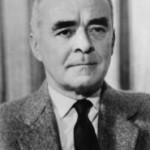
Richard Llewellyn
Richard Llewellyn

Richard Llewellyn was a renowned Welsh novelist, born on December 8, 1906, and passed away on November 30, 1983. His works are known for their vivid portrayal of rural Welsh life, which has won him a wide readership. more

You May Also Like

“He was terribly conscious that he only had one life and it seemed to sad to think that he had wasted it. He could never surmount his immeasurable regret. And that's why I tell you that Byring is right. Even though it only lasts five years, even though he ruins his career, even though this marriage ends in disaster, it will have been worth while. He will have been satisfied. He will have fulfilled himself.”

“It happens, therefore, that readers of the book, or of any other book built about a central concept, fall into three mutually exclusive classes: (I) The class of those who miss the central concept-(I have known a learned historian to miss it) -not through any fault of their own,-they are often indeed well meaning and amiable people,-but simply because they are not qualified for conceptual thinking save that of the commonest type. (II) The class of those who seem to grasp the central concept and then straightway show by their manner of talk that they have not really grasped it but have at most got hold of some of its words. Intellectually such readers are like the familiar type of undergraduate who "flunks" his mathematical examinations but may possibly "pull through" in a second attempt and so is permitted, after further study, to try again. (III) The class of those who firmly seize the central concept and who by meditating upon it see more and more clearly the tremendous reach of its implications. If it were not for this class, there would be no science in the world nor genuine philosophy. But the other two classes are not aware of the fact for they are merely "verbalists" In respect of such folk, the "Behaviorist" school of psychology is right for in the psychology of classes (I) and (II) there is no need for a chapter on "Thought Processes"- it is sufficient to have one on "The Language Habit.”

“Puisque la maîtresse me "reprenait", plus tard j'ai voulu reprendre mon père, lui annoncer que "se parterrer" ou "quart moins d'onze heures" n'existaient pas. Il est entré dans une violente colère. Une autre fois : "Comment voulez-vous que je ne me fasse pas reprendre, si vous parlez mal tout le temps!" Je pleurais. Il était malheureux. Tout ce qui touche au langage est dans mon souvenir motif de rancœur et de chicanes douloureuses, bien plus que l'argent.”