Quotessence
Home / Quotes / Quote by Nikolai Berdyaev

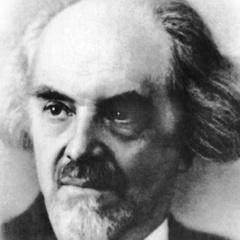
Quote by Nikolai Berdyaev

“Reason is independent of all external authority, is outwardly autonomous; it is not, however, inwardly independent in relation to the whole life of the philosopher engaged in the pursuit of knowledge. It will not allow itself to be stripped of its feelings and volition, of its loves and hates, of its criteria of value. It discovers its ontological foundation in the depths of its own Being, in the intimacy of its own existence; it adapts itself to the philosopher’s belief or scepticism; it varies with his belief as the consciousness expands or contracts. But revelation transforms it.”

Quote by Nikolai Berdyaev

Work

العزلة والمجتمع

Browse quotes and source details for this work. more

Author

Nikolai Berdyaev
Nikolai Berdyaev

Russian philosopher born on March 18, 1874, and died on March 23, 1948. Nikolai Berdyaev is known for his contributions to religious philosophy, existentialism, and liberalism. more

You May Also Like

“No man can live without any basis of philosophy, however primitive, naive, childish or unconscious. Every man thinks and speaks, makes use of notions, categories, symbols, myths, and gives vent to appreciations. There is always a childish philosophy at the foundation of a childish faith. Thus the uncritical acceptance of Biblical science, that of primitive mankind, involves the use of certain categories of thought such as ‘Creation’, for example, envisaged as a moment in time.”

“Technology is the supreme result of knowledge thus objectified. At the same time, the fact of objectification contradicts the idea that the subject is passively penetrated by the object. Therefore the objectified world cannot be, as is often affirmed, a purely objective world. It is a real world, one possessed of a certain degree of reality, of a certain state of Being; but, above all, it is a world which manifests the activity of the creative subject and the reciprocal action of the knowing subject and the object known. Secondly, the subject can orientate himself by means of Existential philosophy, which dispenses with objectification: the human subject does not apprehend the object, but the revelation of human existence and, through it, that of the divine world. Thus in the fight of Existential philosophy, knowledge is both active and creative, though in a somewhat different way. It can illuminate the objective world wherein meaning is revealed, the meaning of human existence and of the universe as part of the Divine Being. But all revelation of meaning is the result of spiritual activity, of the integral rather than the partial reason. To apprehend existence is to illuminate it and to make it significant, to illuminate Being, and consequently to regenerate and to enrich it with hitherto undiscerned elements.”