Quotessence
Home / Quotes / Quote by C.J. Sansom

Quote by C.J. Sansom

“I know everyone would like it to be over. I wish I could believe that myself. But we cannot always believe what suits us.”

Quote by C.J. Sansom

Work

Revelation

Revelation is a book of the New Testament that is widely regarded as a visionary account of the end of the world and the final judgment. It is believed to be the last book of the Bible and is often interpreted as a revelation from God to His prophet, John. The text is filled with symbolic imagery and apocalyptic themes, detailing events such as the fall of Babylon, the return of Christ, and the eternal destinies of both the righteous and the wicked. more
Author

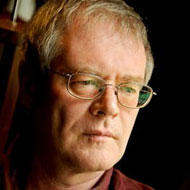
C.J. Sansom
C.J. Sansom

C.J. Sansom is a British writer renowned for his historical novels set in medieval England. Born in 1952, he has made a name for himself with his intricate and captivating narratives that frequently explore the political and social intricacies of the era. Sansom's writing is celebrated for its thorough historical research and compelling storytelling. more

You May Also Like

“It is not possible to eliminate suffering by eliminating pain. Human existence contains inevitable challenges. People we love will be injured, and people close to us will die—indeed, we are aware from an early age that in time we all will die. We will also be sick. Functions will diminish. Friends and lovers will betray us. Pain is unavoidable, and (owing to our symbolic inclinations) we readily remember this pain and can bring it into consciousness at any given moment. This progression means that human beings consciously expose themselves to inordinate amounts of pain—despite our considerable abilities to control its sources in the external environment. Even so, great pain is not in itself a sufficient cause for true human suffering. For that to occur, symbolic behavior needs to be taken a bit further.”

“Malkiel often considered telling his father about her. But Elhanan would have taken it badly. He would have cried “What? You, a Jew, with a Muslim woman? I'm sure she hates Israel….” And indeed she did. Leila, a future follower of the PLO, was already anti-Israel. Between her and Malkiel, argument followed endless and sometimes violent argument. Yes, yes, Israel has suffered, she would say; but does that give them the right to make Palestinians suffer? Malkiel: You know very well it isn't Israel making them suffer! You can blame the Arab governments for their tragedy; why did they exhort them to flee their homes in 1948? And then let them live in refugee camps? Leila: You Jews did all you could to uproot those people and drive them from their land, and now you blame the Arabs? If you hadn't come along, there would have been no tragedy! He: We didn't come along, We came back. Easy enough for you to forget! She: I'm not forgetting anything, but you forget that the Palestinians have been living on that land for centuries, and you abandoned it two thousand years ago! Malkia lost his temper: Abandoned? You dare say we abandoned the land promised to Abraham, Isaac and Jacob? And shown to Moses? And conquered by Joshua? Aren't you ashamed to falsify history? They expelled us from that land, but we never repudiated it, or forgot it, or abandoned it! Since King David there have always been Jews in Jerusalem, and Galilee, and Gaza. She: Oh yes? And the big cities? He: The big cities? Do you mean Haifa, Netanya and Tel Aviv? Do you want to tell me who built them? You, maybe? You were a smattering of people in the desert—do you dare deny that? She: That's the Afrikaner argument in South Africa. He: I forbid you to compare us to those racists and their apartheid! Racism and Judaism are incompatible! We suffered too much from racism to use it against others. She: There you go again with your suffering! As if you were the only people who ever knew hardship!”

“Don't fight it, Tamar. Don't say no just for revenge; no more revenge. No more games. Let's take whatever comes along—the good and the less good alike—simply and in harmony. Despite pain and sorrow, we'll put our trust in what exalts us—my father’s relentless sufferings—and in what thwarts us, too—the ambiguities of life, most of all Jewish life in the diaspora. Will forge new links from which new sparks will rise. Spoken words will become signs, words unspoken will serve as warnings. And we'll invent the rest.”