Quotessence
Home / Quotes / Quote by Charles Dickens

Quote by Charles Dickens

Work

Great Expectations

This novel follows the journey of Pip, a young boy who is raised by his sister and her husband, Joe Gargery, a blacksmith. After receiving a mysterious gift that leads him to believe he has been chosen for a better life, Pip embarks on a quest to fulfill his 'great expectations.' The story delves into Pip's interactions with various characters, including the wealthy Miss Havisham and her adopted daughter Estella, and the convict Magwitch, who ultimately reveals a profound connection to Pip's past. more
Author

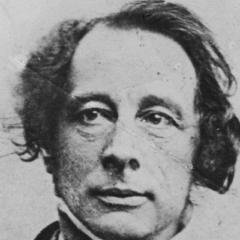
Charles Dickens
Charles Dickens

Charles Dickens, a British writer born on February 7, 1812, and died on June 9, 1870, is one of the greatest novelists of the 19th century. Known for his profound social criticism and vivid narrative style, Dickens' works extensively cover social reality, revealing various issues in the British society of the time. more

You May Also Like

“Popular belief considers Christopher Columbus as some sort of hero, while in reality he was a murderer. While the world admires him as a brave explorer, all this brainless buffoon did was sail around the Caribbean and slaughtered innocent natives who greeted him with nothing but hospitality. You don't discover a land where people are already living. On top of that, when someone invades their land and starts looting, pillaging and slaughtering, he is neither brave, nor an explorer, he's just a petty thief and brut.”

“There is neither happiness nor misery in the world; there is only the comparison of one state with another, nothing more. He who has felt the deepest grief is best able to experience supreme happiness. We must have felt what it is to die, Morrel, that we may appreciate the enjoyments of life. " Live, then, and be happy, beloved children of my heart, and never forget, that until the day God will deign to reveal the future to man, all human wisdom is contained in these two words, 'Wait and Hope.”

“Through a complex combination of whitewashing, guilt, and an intentional recasting of history that absolves them of their hatred, our historical translators have painted a sanitized, impressionist portrait of a struggle for Black liberation that was eventually fulfilled by American’s unwavering commitment to justice and equality. Out of whole cloth, they managed to fabricate a fantastic ahistorical myth that somehow became truth. They remember a socially conservative, respectable campaign of racial reconciliation, not a movement of anti-establishment revolutionaries. And for their sake, the doctrine of nonviolent resistance was eventually reduced to simple ‘nonviolence.’ They never speak of the ‘resisting.”

“O jazz moderno e a música clássica moderna, por vezes, fazem questão em usar cinco, sete, onze, etc. pulsações por compasso (muitas vezes apenas para terem um ar inteligente e invulgar) mas são poucos os êxitos realmente populares.”

“Em música há imensas questões técnicas. Se estivermos a escrever para instrumentos que nós próprios não tocamos, precisamos de aprender imenso acerca deles se queremos que a música seja interpretável.”

“A capacidade de improvisar bem é um talento altamente respeitado e pode conduzir a uma interação de facto interessante entre os músicos intervenientes. Até pode tornar-se competitiva, à medida que os músicos se estimulam reciprocamente a chegar a novos patamares.”

“A métrica, o ritmo e o andamento todos têm o seu papel no nosso prazer. Ainda que os nossos batimentos cardíacos não estejam ligados ao andamento, certamente que consideramos andamentos mais lentos como sendo mais relaxantes e mais empolgantes os que são mais rápidos. Esta tensão estará provavelmente ligada ao facto de não gostarmos da incerteza e, especialmente, ao nosso receio de não conseguirmos lidar com uma situação.”

“O trabalho de um compositor talentoso é criar expectativas e depois ou satisfazê-las ou frustrá-las. Mas o compositor não pode nem deve tentar um empolgamento constante. Como em qualquer história que se conte, ou mesmo num espetáculo de fogo de artifício, acrescentam-se algumas passagens mais calmas, deliberadamente, para que os momentos importantes causem mais efeito.”