Quotessence
Home / Quotes / Quote by Bill Bryson

Quote by Bill Bryson

“Part of the reason people could eat so well was that many foods that we now think of as delicacies were plenteous then. Lobsters bred in such abundance around Britain's coastline that they were fed to prisoners and orphans or ground up for fertilizer.”

Quote by Bill Bryson

Work

At Home: A Short History of Private Life

This book delves into the historical transformation of homes, examining how they have shaped our daily lives and social interactions throughout various eras. more

Author
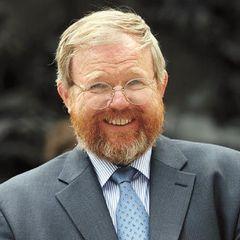
Bill Bryson
Bill Bryson

Bill Bryson, born on December 8, 1951, is a British author known for his humorous and knowledgeable writing. His works span across various fields, including travel literature, natural history, and science popularization. more

You May Also Like

“So full. Full of lobster meat and the sadness of the lobster meat. Full of the feeling of having cracked hundreds upon hundreds of precious shells. Full of the sound and the sight of destruction, the lobsters dead in a pile, some of them with lipstick marks on their empty husks. Their voices piled up on one another. I felt a whispering coming from deep within my belly, the voices not yet at rest, and they said in a tone sympathetic and unsympathetic at the same time, Next Next Next. 'Well,' I said, 'what do we do next?' 'Lobster dinner?' he asked, chuckling a little as if I ought to be chuckling with him as well.”

“I find the US initiative highly problematic. You can write donations off in your taxes to a large degree in the USA. So the rich make a choice: Would I rather donate or pay taxes? The donors are taking the place of the state. That's unacceptable....It is all just a bad transfer of power from the state to billionaires. So it's not the state that determines what is good for the people, but rather the rich want to decide. That's a development that I find really bad. What legitimacy do these people have to decide where massive sums of money will flow?”

“Is there a difference in the amount donated—based on the "suggested donation" you list? Desmet (1999 ["Asking for Less to Obtain More." Journal of Marketing Research, 29(4), 430–440.]) found it depends on which suggestions you manipulate. Suppose you have the following "suggested donations": •$15 •$30 •$50 •$75 •$100 Desmet's research suggests that changing the $30, $50, or $75 will have little effect, but raising the top or the bottom number will have significant results. In his research, raising the top number led to overall larger donations. Strangely, raising the bottom number led to significantly lower response rates. Why would raising the $15 cause fewer people to donate? The dropoff came from previous donors who had contributed a small amount. Desmet cites an "aversion to the extremes," whereby donors do not want to contribute the smallest or the largest amount on the list. So adding a $125 choice would increase the number of people who donate $100. But if the lowest number shown becomes $30, then people who donated $30 before would now be donating the lowest amount listed—which they don't want to do. Instead, some of them may choose not to donate.”

“I find the US initiative highly problematic. You can write donations off in your taxes to a large degree in the USA. So the rich make a choice: Would I rather donate or pay taxes? The donors are taking the place of the state. That's unacceptable....It is all just a bad transfer of power from the state to billionaires. So it's not the state that determines what is good for the people, but rather the rich want to decide. That's a development that I find really bad. What legitimacy do these people have to decide where massive sums of money will flow?" ~ " I find the US initiative highly problematic. You can write donations off in your taxes to a large degree in the USA. So the rich make a choice: Would I rather donate or pay taxes? The donors are taking the place of the state. That's unacceptable....It is all just a bad transfer of power from the state to billionaires. So it's not the state that determines what is good for the people, but rather the rich want to decide. That's a development that I find really bad. What legitimacy do these people have to decide where massive sums of money will flow?”