“We, that is, the traditionalists like myself, use the term ‘‘modernism’’ not in a vague way as characterizing just things that happen to be around today, but as a particular way of looking at the world, a worldview that began in the Renaissance in the West with such components as Renaissance humanism, rationalism, et cetera. As I have mentioned already, modernism rejects the primacy of absolute and ultimate truth transcending the human order and descend- ing upon the human realm from the Divine Order. It places man himself at the center of the stage as ‘‘the absolute.’’ In a sense it absolutizes the human being in his or her earthly reality. Usually it does not come out and say so explicitly, but that is what it really means; that is, it takes the absolute away from God and puts it on the human plane, and therefore makes human reason, human perceptions, human interests the criteria of reality, of knowledge, of the truth, of the goal of human life. Therefore, as a consequence it substitutes the significance of the temporal and the transient for the abiding and the eternal.”
Quote by Seyyed Hossein Nasr
Book:در جستوجوی امر قدسی
Work
در جستوجوی امر قدسی
Browse quotes and source details for this work. more
Author
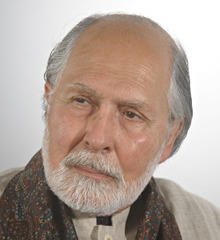
Seyyed Hossein Nasr
Seyyed Hossein Nasr is a distinguished Iranian philosopher, intellectual, and scholar of Islamic studies. Born on April 7, 1933, he has made significant contributions to the field of Islamic philosophy and comparative religion. His work emphasizes the importance of understanding Islamic thought in its historical and cultural context. more
You May Also Like
“The sadist doesn't create a masochist; he finds him already made.”
Source: The Denial of Death
Source: Heir of Novron
Source: The Book of Lost Things
Source: The Cruel Prince
“None of us know how to fix ourselves, at least not entirely, not well enough.”
Source: Nobody Is Ever Missing
Source: The Crossing
Source: A Light Bulb Symphony
Source: Tôi Là Bêtô
“Be fair before being generous, be human before being fair.”
Source: The Blind Giant