Quotessence
Home / Quotes / Quote by Steven C. Hayes

Quote by Steven C. Hayes

“When we fly planes over countries, dropping bombs on the evil ones, I think we're doing something very similar to what's being done when the infidels are getting their comeuppance with planes going into buildings. So it's gotten to the point where if we are not healthy psychologically as a human society, we will not have a planet to live on. And that's what keeps me up at night, when I see so little focus on the behavioral side of these problems, and the idea that just politics, or just physical science, is going to solve this.”

Quote by Steven C. Hayes

Author
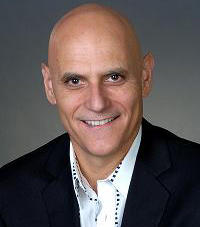
Steven C. Hayes
Steven C. Hayes

Limited information is available about Steven C. Hayes, who was born in 1948 and is of an unknown profession. more

You May Also Like

“It just struck me as really odd that there were all of these conversations going on about what young women were up to. Were young women having too much sex? Were young women politically apathetic? Are young women socially engaged or not? And whenever these conversations were happening, they were mostly happening by older women and by older feminists. And maybe there would be a younger woman quoted every once in a while, but we weren't really a central part of that conversation. We weren't really being allowed to speak on our own behalf.”

“I remember at the time - right before we started Feministing.com - doing a Google search for the term "young feminism" and the term "young feminist," and the first thing that came up was a page from the National Organization for Women that was about 10 or 15 years old. And it just struck me as so odd that there was all of this young feminist activism going on, but that it wasn't necessarily being represented online, that the first things in a Google search to come up were really, really old. I think to a certain degree we really filled a gap, and that's why we got such a large readership.”

“There was no real strategic decision about editorial tone. It was kind of a write whatever you want to write, and we'll see how it goes. I think that we lucked out in that all of the women who started writing at Feministing.com were really funny, and I don't think that's something people are used to seeing or hearing when they read feminism. You know, you think feminism and you kind of think academic, women's studies, dry, humorless; there are all of these stereotypes that go along with what feminist thought is and what feminist writing is.”

“We've been growing our readership every month, and we're kind of like, where are they all coming from? This is wonderful! And I think one of the best surprises was that you hear so often that young women don't care about feminism, that young women don't identify as feminists. But really, the majority of our readers are young women. So to see so many young people kind of get involved and really take to Feministing.com was a really exciting thing.”

“I was an eight-year-old kid when I watched the first Apollo Moon Landing way back in 1969 and there was something about that moment that really stuck in my head. I'd always been interested in space and flying and I was building model rockets and model airplanes, but something about that moment, I can remember like it was yesterday watching the Apollo Lunar Lander approach the surface of the Moon and then later watching Neil Armstrong and Buzz Aldrin take the first steps on the Moon, and something that day started the dream for me that, hey, I want to be like those guys.”

“Those who remember Washington's cold war culture in the 1980s will recall the shocked reactions to Reagan's intervention. People interested in foreign policy were astonished when in 1985 he met alone at Geneva - alone, not a single strategic thinker at his elbow! - with the Soviet Communist master Gorbachev.”

“It was in the back of my mind, even while I was going to school, but it wasn't until I was at university studying engineering that I thought, well what do I really want to do? And I kind of came back to that and I said, well the degrees I'm trying to get are going to qualify me to apply. And so, that's what I did after I finished my, or after I was getting my doctorates. That's when I first applied to NASA.”

“That was in 1994, July, 1994, and I can remember that like it was yesterday too because it was the culmination of a childhood dream to finally be laying on the launch pad inside a space shuttle and getting ready to be launched into space. The impression of going into a space shuttle is that it looks like a brand new simulator. We spend so many hours inside a simulator that everything is very familiar. Every switch, the seats, the way things work, but the vehicle, the actual spacecraft looks brand new because it hasn't been used nearly as much as the simulators.”

“Even though I knew I was inside the space shuttle getting ready to go fly, something about it wasn't completely real up until we got the call at about one minute to go, to close and lock our visors and start our oxygen flow. People often ask me, "What did it feel like right at the moment of launch?" And they're surprised when I tell them actually what I felt was relief. It wasn't like being anxious or scared or anything. It was relief because this is something I had wanted to do my whole life and now that the boosters had lit, we were on our way to go do it and nothing was going to stop us.”