Quotessence
Home / Quotes / Quote by Judith Butler

Quote by Judith Butler

“There are doubtless all kinds of ways of explaining why people want security, but I do not think we can start with the psychological explanations. Even psychological states like fear or desire for safety are conditioned by social and political forms of intimidation and scare-mongering that intensify those emotions, and even work to persuade people that nothing less than their survival is at stake.”

Quote by Judith Butler

Author
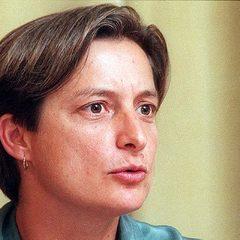
Judith Butler
Judith Butler

Judith Butler is a renowned philosopher, born on February 24, 1956. Her research focuses on issues of gender, identity, and power, having a profound impact on postmodernism and gender theory. more

You May Also Like

“I do not mean to say that such institutions act unilaterally on psychic life, or that they determine certain psychic outcomes. Rather, they exploit forms of fear and insecurity that are there for any population - no political organisation of life could ever fully do away with fear and insecurity; but some work to intensify, accelerate, and make more acute forms of fear, and to provide ideological focus for such intensified fears, at which point critical thinking has a fierce rival. The critical analysis that shows precisely how those forms of fear are promulgated, and for what purpose.”

“I am sorry to be so blunt, but I do not see much ambiguity here. [Barack] Obama was late to affirm the Egyptian revolution as a democratic movement, and even then he was eager to have installed those military leaders who were known for their practices of torture. And now he is quick to make allies with the Muslim Brotherhood for tactical reasons as well (though earlier that same administration stoked Islamophobic fear about that very political party).”

“I certainly don't mean to suggest that all investigative journalism prior to 9/11 in the US was praiseworthy. But there were more examples to which one could point, and there were at last some activist photographers who understood that getting information into the public sphere in spite of military censorship was a right and obligation within democracy. That strain in war journalism did nearly vanish during that time.”

“I am not sure that I know enough about the pre-history of 9/11 to agree or disagree. But I did think at the time that the [George W.] Bush administration took a number of cues from the Israeli government, not only by drawing on and intensifying anti-Arab racism, but by insisting that the attack on US government and financial buildings was an attack on "democracy" and by invoking "security at all costs" to wage war without a clear focus (why the Taliban?), and by suspending both constitutional rights and the regular protocol for congressional approval for declaring war.”

“It is true that one was not allowed at the time to really ask, what would lead people to do this, from what sense of political outrage or injury? And in that way, the possibility of sympathetic identification was foreclosed. That does not mean that some people took quiet pleasure in certain icons of US capitalism coming down, even though they would oppose such action on moral and political grounds.”

“A different kind of pleasure surfaced in the aftermath, the pleasure of seeing the towers fall time and again, the experience of being entranced by the visual spectacle, and then also the very graphic forms of public mourning for exemplary citizens (taking place at the same time as the refusal to mourn the undocumented, the foreign, gay and lesbian lives lost there, for example). I am not sure that the guilt over the pleasure re-installed the good citizen.”